
.png)



Change Manager: The Role You Need With Richard Carson

Organizational change management takes center stage as Adam Markel and Richard Carson explore what it really means to lead through constant disruption and uncertainty. Drawing from decades of experience, Richard introduces the often-overlooked change manager role and unpacks how leaders can move beyond reactive decision-making into a more intentional, forward-looking approach to business transformation strategy. The conversation moves through the realities of workplace culture change in a post-pandemic, AI-driven world, highlighting the tension many organizations face between resistance and adaptation. At its core, this exchange circles back to a simple but demanding leadership truth: managing organizational change begins with listening, not control, and the leaders who learn to hear what is happening beneath the surface are the ones best equipped to guide their teams through what comes next.
Show Notes:
- 02:49 From Divination To Management: Defining The Change Manager
- 05:07 The Listening Post: Bridging The Gap Between C-Suite And Staff
- 12:00 The Three E’s: A Human-Centric Model For Organizational Health
- 20:33 Two Cultural Tsunamis: Navigating The Pandemic And AI
- 27:38 Future-Casting: Moving From Reaction To Strategic Preparation
- 34:04 Beyond Resistance: Establishing A Proactive Change Function
—
Get the newest Change Proof Podcast episode delivered directly to you – subscribe here. And, if you’re enjoying the podcast, please give us a 5-star rating on iTunes! For instructions click here.
How do we leverage continuous uncertainty to thrive in this unprecedented new world?
The answer is to build the resilience we need to power us through the challenges we face so that we become “Change Proof.” Prepare to tackle the future with confidence by reading Adam’s latest book Change Proof: Leveraging the Power of Uncertainty to Build Long-Term Resilience.
—
Watch the episode here
Listen to the podcast here
Change Manager: The Role You Need With Richard Carson
Welcome back to another episode of the show. We are going to have a really interesting conversation. Great guest. I am going to read a little bit about his history, CV, and a very accomplished human being, a very accomplished person in the area of business, leadership, and thought leadership. He has written a lot of books. He has spoken, trained, and consulted for many of the world’s top organizations. He has some really sage advice to share with us. I am looking forward to the conversation. I know you are going to enjoy it.
Let me read a bit about him, and then we will jump right in with the first question. Richard Carson is a consultant, practitioner, author, and academic researcher in organizational change management. He is also the CEO and president of Carson and Associates, which provides consulting services to private sector and public sector organizations in change management, organizational development, strategic planning, and performance management. I could say a lot more about him, but I have one question to begin. Stay tuned for this episode of the show with Richard Carson.
—
Richard, it is fun to hear your bio at this point. I enjoy it sometimes listening to people introduce me and share all these things about my life. That is interesting. My question for you is, what is one thing that is not part of that introduction or that CV that you would love for people to know about you? One thing that is not included in that.
Maybe it is the title of the book, The Book of Change. It is a takeoff on the Book of Changes or The I Ching. I have had a real interest in China. I have been there twice. I adopted daughters from there. I do Tai Chi at my age to keep fit. Basically, that was it. The Book of Changes actually is a book of divination that the Chinese use to foretell the future and to answer questions. The Book of Change is a takeoff on that. That is really what it is for in terms of organizations is to help them find their way.
You mentioned The I Ching. Could you say a little bit more about that for people who do not know what The I Ching is?
The I Ching is an ancient book of divination that was used almost as the Greeks might have used oracles as a way to foretell the future and to guide emperors through difficult times, through wars, through famines, and upheavals. I really associated with that.
From Divination To Management: Defining The Change Manager
Let us put it into a recontextualize it based on this title of the book, Book of Change. Is it a book that portends the future, or is it a guide to the future?
It can be. Basically, it is a process that I developed that helps organizations go through difficult times. Every large organization usually has a person called the risk manager whose job is to make sure that things do not go badly, personally or otherwise. What I really advocate for is having a person who is a change manager. That is a totally different approach.
A change manager basically is a person who not only takes you through changes as they come, both internal and external, but also somebody who is always scanning the horizon for those internal and external changes. You need to listen to your own employees. That is a skill that is often lacking in executives. The ability to listen well. They talk a lot, and they give orders a lot, but listening is a whole other skill. The change manager is a person who listens from the bottom up and looks at potential threats that are existential.
Existential threats could be anything from a pandemic, as we have just gone through, to economic, political, or even a natural occurrence like the fires in California or Hawaii. There are a number of things that you need to plan for. The other really important thing is to have a person who is a change manager, but to really have a strategic plan, 3 to 5 years, that is really actionable, that actually has resources dedicated to it, and has people who are accountable for those actions.
The Listening Post: Bridging The Gap Between C-Suite And Staff
I want to parse that out a little bit more to Richard, because I think for the people that are listening to this show that are part of organizations from a leadership standpoint, they may get great value out of this idea. I want to understand this change manager’s role just a little bit more, because it seems like part of it is like a soothsayer. Part of it is the forecaster, the person who is looking out on the horizon for the icebergs and other things, whether those are internal or external.
Someone who is tuning in, which is more of an internal function, listening from the bottom up and listening within the organization for certain things. That person has to be strategic-minded, but also has to be somebody who is looking out to see and predict when things are going to require change. Is that correct? Did I get that right?
Yes. Let me give you an example. I managed an organization of 175 people with about a $75 million annual budget. I created a position of change manager. That person’s job was basically on a daily basis to go around to the different organizational units and make sure that they were following the strategic plan, and that they were undertaking and participating in the actions that were in the plan. It is one thing for a lot of organizations to create a strategic plan with a mission and a vision, and then they throw it on a shelf and ignore it, or they do not really work it. The change manager’s job is really to work the strategic plan on a daily basis and to make sure that people are accountable and have the resources to accomplish that.
The change manager’s job is also to basically listen to stakeholders. Stakeholders can be everybody from the frontline staff all the way up to the leadership group. Stakeholders are also vendors, the public, and customers. It is also the job of the senior executive, the CEO, or the president to do that. Quite frankly, having been in that position, you spend a lot of your time in firefights. It is a daily issue that comes up in terms of not just working the strategic plan, but you just have a lot of issues to deal with. The change manager really is almost a listening post for the executive, basically coming back and saying, “Look, this is what I heard from these people on staff.”
As a consultant, I have been brought in as the change management agent to do assessments. That is what I will do. I will start with the frontline customer service staff and work my way through the entire organization, doing interviews to find out and basically be tellable. What you tell me is off the record. You can be completely honest. I am not going to quote you or point my finger and say, “This person said this.” My role as the consultant change manager really is to get out in the field and talk to the stakeholders I mentioned to get feedback. Listening is really important.
Again, for people that are listening to this, maybe the only organization they have most of their experience in business is in 2 or 3 different groups on 2 or 3 different teams. Maybe it is even just the same team. I know there are still plenty of people who have been with the same organization for 20 or 30 years.
That puts you in a bit of a silo sometimes, in the sense that you do not know how other organizations are doing it, what their structure is like, how hierarchical it is, whether it is command and control, or something different. My question is, for those folks that are tuning in to you, maybe they think that a change manager’s role is commonplace, but it is not, is it?
No, it is not. A change manager role in most organizations does not exist. You have a risk manager to do damage control. You do not have a change manager. The field of organizational change management really started about 1947 with Kurt Lewin. I looked at over 22 major change management models. They all follow basically the same overview that he created. That really has not changed much, but it is not commonplace in most organizations. One of the things that you mentioned I wanted to touch on is when you have an organization that has been around for some time. It could be family-owned or a Fortune 500.
What you find when it comes to change is that if you talk to people about change, their first reaction is, “Why would we do that? We have always done it this way, right?” People react very negatively to change. It freaks them out. They do not like it. They have been doing the same job for 20 years or 30 years, and you come along and say, “Why do we not do something different?”That is a reaction you can have. One of the jobs of the change manager, whether it is on staff or a consultant, is to co-opt the employees into the process so it is not scary. One of the things I have done is set up teams within the organization.
We said, “Look, we want you as staff to look at this and tell us what you think. We are going to give you ownership of this. You tell us how you think we could change this so that it would be what I call the three E’s, more cost-effective, more performance-efficient, and more culturally empowered.” Everybody likes to be asked for their opinion. If you go to folks and ask them to participate in the process, then it is not so scary, and you will get a much better product, because they know at their level what works and what does not work. If you ask them what they would do differently, they will be glad to tell you.
The Three E’s: A Human-Centric Model For Organizational Health
I would love for you to go through each of the three E’s separately, Richard. I am glad this came up because I wanted folks to hear it, since we are always in our own little ecosystem. Sometimes it is not so little, of course, but yet this concept of a change manager role and responsibilities. Typically, in my experience working with lots of organizations, it does not exist. You have confirmed that, and I appreciate that you did.
Maybe some people are considering what it could look like if we were to bring this function on board or redeploy and reconfigure assets and talent within the organization to be focused on this. Before we get to the E’s, where does this function typically sit in your experience? We are talking about managing change. Change itself is more ubiquitous today than I have ever seen it, and the velocity of change is only increasing.
The exercises that organizations, leaders, and teams are going through right now in various changes, everything from mergers and acquisitions and spinoffs to changes that affect the workforce, are just ever-present. Change is a constant. It is not the exception in any respect. Disruption is the same. I would love to know where this typically sits in the organizations you have seen? I would love for you to walk us through those three E’s as well.
I will take the word where the person sits literally. I use my own example. We restructured the organization spatially. In my office, on one side, I had a human resources person, and on the other side, I had the change manager. My interaction with both of those people was daily and hourly. That is really important because you need that constant feedback. A lot of times, the human resource person can be the change management person. If you have a smaller organization, you can get training in that and become that person. Where they sit in the organization is they have to be part of the leadership team. They need physical proximity so they can come in and tell you immediately what is going on with the employees or the stakeholders.
That makes sense. Do you also advocate that this person be a part of the C-suite or not as a senior?
Yes. You may have a cross-section. You have people who are division managers or section managers who have particular units that they run. In terms of a management team, we also have another group of people. A finance manager, a change manager, and a human resource manager. They manage functions. Having that kind of cross-pollination is really important. Those people are all part of the management team.
It has to be very clear from the CEO or president that the change manager’s standing is equal to any section head. Otherwise, the section manager who is running a group of people in a production plant will basically ignore those people and say, “I am really more important than the human resource person, the finance person, or the change manager.” They can talk all day long, and I will ignore them. You need to make it really clear that they have equal standing, and you pay attention to what they are saying. If need be, you bring in the change manager and the section person together and say, “Look, we need to deal with this problem. We need to change this.”
Let us walk through the three E’s because that feels like a very solution-oriented structure.
These are really our outcomes of the process itself. The organizational model that I use is People Sustained Organizational Change Management because organizations are people. If you do not approach change management from the point of view that there are human beings here who are going to help you or derail you, then you have a problem. The PSOCM process is three overall steps. There are ten other steps under that, and then 39 individual actions. It starts all the way back to Kurt Lewin in 1947. Almost every one of the 22 models I looked at follows the same high level.
Your first step is to do an assessment of the organization, you follow that up with implementing the actions, and then the third part is to maintain those actions. Drilling down from that, I will take you quickly through the ten steps. The first steps are the identification and scoping process, where you kick the program off. It is important because you need to get people on board from the bottom up.
They have to understand that change is not about punishment. It is not necessarily about causing pain for them. They are going to be culturally empowered. They are going to be part of the process in developing the answers. There is a data collection and analysis piece. I use a diagnosis model that was created by the National Institute of Health for patient diagnosis, because organizations are people.
If you approach it from the point of view of organizational health, then that particular model is very useful. The fourth part is where you get feedback from stakeholders internally and externally. When you implement it, I use both process mapping and the BPR process. You manage the restructure and lock in the change. There is a whole series of things you can do to lock in change. Finally, you have to maintain the changes. It is an ongoing process through a strategic plan and other things.
Would you lay out the terms? I caught the one I really want to talk about, which is culturally empowered, and that particular E, and then what about efficiency?
The first one is that any business gets what is cost-effective. What is the bottom line in terms of being profitable in the private sector? In the public sector, it is a perception because you are dealing with politics. Performance efficiency is not the same as being cost-effective. There are a lot of things you can improve your performance on that do not necessarily get to the bottom line.
For example, getting back to your customers in 24 hours is not necessarily going to make you more money than you can identify, but getting back to people in 24 hours is really important. It makes them feel better. They feel like you are paying attention to them. There are a lot of performance efficiency things you can do that do not necessarily affect the bottom line.

Two Cultural Tsunamis: Navigating The Pandemic And AI
This is self-serving when I am asking this because I have a brand-new book coming out in a few months about business culture. We have all seen a sea change in culture since the pandemic. I want to get your thoughts on that statement. Do you think culture has changed much since the pandemic? Was that a catalyst for change? What is the state of culture in the world of business today?
We have gone through two cultural tsunamis at the same time. Number one is what you talked about, the pandemic. The other is artificial intelligence. The pandemic basically changed everybody’s attitude about working remotely. Now you have people who work in an office, people who work 100% remote, and then you have hybrid.
You have a situation where everybody had to learn to work remotely. My wife and I have our own offices in our house. She works for a major energy company and works remotely. It works great. Other people had kids and a computer in the corner of the kitchen. It was a nightmare. You have the situation where everything flipped, and organizations said, “You have to come back to work now.”
That kind of whiplash really affected a lot of people emotionally and economically. Some were able to change easily. Others were not. The other cultural tsunami is artificial intelligence, which, by all accounts, could create, at least according to the United Nations, unemployment. It certainly will change what people do and how people do things. There was a recent trend in the last two years where a lot of people got involved in terms of coding. That whole field is going to vanish.
A whole generation of kids was told to go to school and become coders.
I feel this is going to vanish because they are not needed.
My view is that I’d say some things are sometimes stupid and controversial. Anybody who went to school and paid maybe a hundred thousand dollars in debt for an education in coding, the government should pay for this. The government wastes tons of money all the time. Nobody should get their hackles up when I say “The government should pay for this,” because God knows what we pay for already. They should wipe out any debt of any person who went to school to study coding because they were told in high school, “That this is a burgeoning field. This is what we should be doing.” They have wiped out the debt and let them start fresh. That would be my opinion.
They would have been better off in solid waste management, driving a truck.
Becoming a plumber. Any vocational skill or other training would have been better than telling them to get into that area. When the likelihood for anybody who had that literally had their finger on the pulse of technology in this country would have been able to say that’s ridiculous.
Look at the entire field of trucking. Trucking has been a mainstay for a lot of middle-class America who they may have graduated from high school or not, but being a trucker was a fairly good-paying job for in terms of being a middle class, that being a trucker is going to vanish because you’re going to have, you already have automated. The cultural tsunami in terms of AI is mind-boggling. There’s no way you get people on both sides to say, “It’s going to have 40% unemployment.” People, I have to say, it’s what they’ll create, all kinds of new jobs like coding. That’s something I’m not going to try to predict other than robot maintenance and repair. It’s going to be people. We’ve survived the pandemic for now.
We should also say there were some people, again, this is neither you nor I obviously, who have a crystal ball in this. We’re just there’s a little prognostication here. We can look back. The great crystal ball is always history and always looks back to see what actually occurred as something that informs how we look at change today. There were people who made their living putting shoes on horses. A lot of people.
They still do.
There are a few people who are blacksmiths out there, I’m sure. That was a major source of activity, employment, and occupation at a point in time. This motor vehicle thing happened. The automobile happened. It’s not like we haven’t been through this kind of sea change.
One of the things I talk about in the book is to read books and read newspapers, too. The book talks about more than just a process of change, but takes a look at exactly what you’re talking about. We came through a major pandemic. If you do not think we’re going to have another pandemic, then I feel sorry for you because I read that the 1918 Spanish flu killed a hundred million people. That’s as many people as died in World War I and World War II.
Our ability to deal with pandemics, epidemics, I do not believe that it’s necessarily going to be easy the next time. My father fought in World War II, and he got married, and no sooner than he got married, they bombed Pearl Harbor. There are things you just cannot predict, but they are basically just repeating themselves, whether they’re wars, pandemics, the economic crash in the thirties, or the Great Depression. I remember my grandmother. If I took her to our restaurant, she would take all the ketchup and mustard packets because your mindset was stuck in the 1930s. She would collect things like that, which I thought was totally ridiculous. For her, it was not.
Future-Casting: Moving From Reaction To Strategic Preparation
There’s a book that came out some years ago called The Black Swan. Forgive me for interrupting. I feel like what you’re saying, and I feel intuitively that this is true, that there are no Black Swan events. There was a book by that title. In part, what we can say about change, and I think in winding down this conversation, which is never a winding down, it’s just an opening up further and further to the idea that change is the natural order of the universe. In fact, I would offer that when we’re working with teams or even delivering keynotes on this kind of topic.
The first thing we have to do is create a bit of an awareness around change itself because change is the process of growth. There’s nothing that exists on this planet or beyond this planet that is not the result of some evolution, some growth through change. We do not want the change to stop. I do not know that we want it to kill us or kill others. I do not think anybody would ever wish for that, but that does happen at times for sure. If there are no black swan events, then what we really have to think about is how we actually forecast or prepare for change when we do not know what type of change is ahead of us. Does that make sense?
The ancient Greeks said that the only constant is change. I actually spent some time, and I was able to talk to Nicholas Taleb, who wrote The Black Swan. I would recommend that anybody get a copy of it and read it. It’s a book. He talked about how there are white swans, gray swans, and black swans, and black swans, or you never see it coming. It could be a world war, a pandemic, or a recession. I talk about that in the book, what the possibilities are, and what could be natural in terms of wildfires. I live in Portland, Oregon. In 1980, I was driving down the freeway and witnessed a volcano blow up that spread ash all the way across the plain state. You cannot predict everything, but that’s not an excuse for not trying to contemplate it.
The Coast Guard and then me, it’s been a minute since that book was sitting on my desk and I was reading it, and it is dense. It’s not a happy-go-lucky book, and it’s not a quick read, at least not to my brain or intellect. It’s really important information conveyed in it, and the black swan that is. It may have been in that book where I was introduced to the Coast Guard, the way the Coast Guard approached change, its process for change management, or change for forecasting.
I’m trying to recall the term that was used for this. It was literally playing, almost gamifying, not gamifying, but laying out a game strategy for a potential change. When 9/11 occurred, which again, whether it’s a volcano or any of the things that you just mentioned, or 9/11 itself, none of these things are really black swan events.
When you look back at it, there were lots of signs that could have been and should have been sort of looked at and observed and assessed, etc. What the Coast Guard had done years before 9/11 was to actually map out and future cast, I think is the term they actually use now, it’s coming back to me, future cast the potential scenarios, even the most bizarre ones, like for example, being invaded by Mars, Martians, or aliens or whatever.
Somebody else has done that is FEMA, the Federal Emergency Management Agency. I actually got a grant. I was a planning director for the Portland metro area of a million people at one time. I got a grant from FEMA to do it. It’s the same thing. It’s what’s called a tabletop exercise. The tabletop exercise had to do with the fact that along the Oregon, Washington, and Northern California coast, something called the Santa Monica plate.
It just basically is one plate going over the other plate. Every 750 plus or minus years, there’s a Richter 9 earthquake. The Richter 9 earthquake basically levels everything. In the Portland area, that means the bridges go down, the buildings go down, and a million people, it’s like being in Dresden in World War II. The tabletop exercise that FEMA uses basically takes you through that disaster. You start from day one, and it happens.
You do not know what the hell you’re doing, and you react to it. What came out of that is that the FEMA grant was basically to create a strategy to deal with that, with all possibilities. The bridges go down. One to five is no longer functional in terms of moving goods, moving help up and down the coast. A lot of agencies have really looked at that, but FEMA is a really good one in terms of anticipating the worst case.
Just to close the loop on that, on that reference, the Coast Guard on the day of 9/11 were among the most, if not the most prepared for that event when it happened, because they had forecast, they had future cast the potential for that very thing to happen. When we think about change, maybe this is a good place to land this conversation.
We cannot just always be in reaction and in resistance because we know people, as you said at the very beginning, resist change. They fear it, they resist it. If that’s your approach to resist it, to react to it, or to manage people’s reaction and resistance, you’re really behind the curve as opposed to being ahead and planning for it. To your suggestion, even hiring or creating that post, the function of a change manager is to actually be very much ahead of the game when it comes to what changes are ahead of us, versus just the ones that we’re even dealing with at the moment. Does that summarize that just a bit?
Yeah.
Beyond Resistance: Establishing A Proactive Change Function
Just my last question for you is, you’re seeing a lot of things, Richard, as I do in these organizations. I know this is a difficult question because there are so many things, and we’ve got lots of processes. You’re a consultant, and so am I, and process is really important. This may be unfair.
If you were going to sit down with some decision-maker, some champion, some leader in an organization said, there’s one piece of advice I’d give you when it comes to how to manage the culture of this organization so that people are more empowered, are more feel like they are not a victim to these change decisions, but rather are participating in them and are going to be better for them, even if they do not fully cannot see more than a few feet ahead of them. What would you say? What do you say in those instances?
The most important skill that an executive manager can have is being a listener. I remember once my wife had a problem she wanted to talk about, and she was talking about it. I was given her advice, and she stopped me and said, “No, I want you to listen. I do not want your advice. Want you to listen.” That’s really important.
The people need to know in the organization that you are listening to what they’re telling you. I used to walk around Oregon, my own organization, on a daily basis and talk to people all over the organization, whether they were on-site, off-site, wherever. No matter what their job was. it was important to talk to people and just ask them how things were going, what problems they had.
Listening is really an important skill. When it comes to a CEO or president, people expect that person to make decisions. It’s almost part of their DNA that they jump right on it and make a decision. This is what we’re going to do, come hell or high water. That’s great. That’s your job. It’s also your job to listen to what people are telling you and try to make sense of what is going on. That’s not a skill that all managers have.
That’s the understatement of the moment.
One of the things I found is that as a consultant, a board of directors, a city council, whatever, we’ll hire you and bring you in and say, “This is a problem we have. We want you to fix this problem.” After you’ve talked to people, you realize that’s not the problem. They really do not know what the problem is, that they do not in terms of what it may be that they do not like, but what they think is causing those outcomes may not be a fact.
I did a study for one organization, and the problem was a person, and the person was a manager. The movie, A Miracle on 34th Street, had a personnel manager who was a bit retentive. Let’s put it that way. This guy was making people report their activities in fifteen-minute increments. Think about that all day long, you’re reporting in fifteen-minute increments.
You’re not doing anything but reporting the fifteen-minute increments. He took his time management class too seriously. What people think is the problem, and maybe the problem, or it could be two different things. Listening is really important as a manager because you’ll find out something, things very interesting.
I just so appreciate you saying that, Richard. It’s a perfect place for us to put a pause on this conversation for the moment. This is to the audience tuning in or watching potentially on YouTube, full information about Richard’s organization, about his new book, and to say the title of your book again, Richard, please.
The Book of Change.
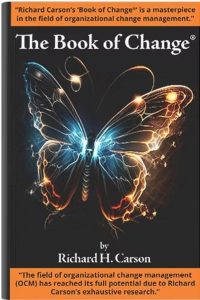
The Book of Change, and there’s a website, BookOfChange.com. Always good when you have a book to have a website to go along with it. Not everybody knows that. Not everybody does that.I think it’s great. Best practice. All of that information will be in the show notes. We appreciate, as always, your time and your tuning in because the people we’re speaking to right now are tuning in to us.
We would love to listen to you. If you’ve got thoughts, if you’ve got questions or comments, please feel free to share those with us. I say Richard and I by going to AdamMarkel.com/Podcast and leave your comment, your question, and it’ll be answered there by us when we receive it.
Thank you so much for always being a part of this community. If you love this conversation, if you think this would be meaningful, useful to someone else, please share it with them, whether it’s a friend, a colleague, a family member, even, that would be fantastic. For now, anyway, I will just say thank you again and ciao for now. Richard, thank you as well.
Thank you.
—
I love that conversation. I hope you guys did. It went into some really interesting areas and directions. I love the fact that I can have these conversations be as unplanned as we have a sense of what we want to talk about. We do a little pre-frame beforehand. We select our guests quite carefully. That is a whole process in and of itself, and making sure the good fit for the show, for you all, and all that. Beyond that, it’s just a lot more interesting to me to have the conversation be organic and not have a canned set of questions.
I always tend to open in the same way and try to close in the same way.Other than that, everything is a bit up for grabs. Love the discussion with Richard talking about things like black swan events and whether they’re actually black swan events at all, or whether they were entirely predictable in the first place, in the context of change, because change is ubiquitous now. It is everywhere. It is upon us. It is happening faster, not just more readily, but faster as well.
AI being one element of that. Speaking about his process for change and what change looks like, talking about some of the aspects of his book and his consulting, and the three E’s in particular, and that just to me was fascinating. To hear somebody who’s been so knee deep, elbow deep, neck deep in change management for so long.
Also phenomenal. Love the fact that he shared with us what I consider to be a best practice at this point. That organizations must have a change manager, a function and person, a human being that is responsible for shepherding change, for looking at change, and for really listening. We spoke a lot about the importance of listening and how difficult that is in many contexts, and from the highest levels of leadership sometimes.
It is also so sorely needed and so lacking as well. The Book of Change is the title of Richard’s treatise on this topic. I highly recommend that you all check that out and other things that Richard and his consulting firm are up to. I know this was an episode that I think has a lot of value. If there are people in your ecosystem that you think would really benefit from hearing some of what we discussed, please share this episode.
If you got a good feeling from the show and you would not mind taking two minutes to rate this episode on the platform that you consumed it, giving it the best five-star rating or whatever rating makes sense to you. I just want to say once again, thank you. How important it is to us that you took the time or will take the time to do that is also greatly appreciated. Thank you for being a part of this community.
We hope that you’re getting value out of it and that if you’ve got questions, comments, concerns, whatever it might be, that you’ll reach out to us and let us know. It’s very easy to do that. Team@AdamMarkel.com or you can leave a comment or question at AdamMarkel.com/Podcast as well. For now, anyway, I would just say thank you again and ciao. We’ll see you on the next show.
Important Links
- Richard Carson
- Richard Carson on LinkedIn
- Book of Changes or The I Ching
- The Black Swan
- The Coast Guard
- The Book of Change
- The Book Of Change
- AdamMarkel Podcast
About Richard Carson
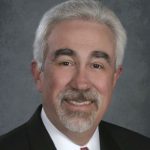
Richard Carson is a consultant, practitioner, author, and academic researcher in organizational change management (OCM). He is CEO/President of Carson & Associates, which provides consulting services to private-sector and public-sector organizations in change management, organizational development, strategic planning and performance management. Mr. Carson’s post-graduate, doctorate studies were in organizational psychology at Washington State University. He has a Masters of Public Administration from Lewis and Clark College and a Bachelor of Science in Urban Studies from Portland State University.
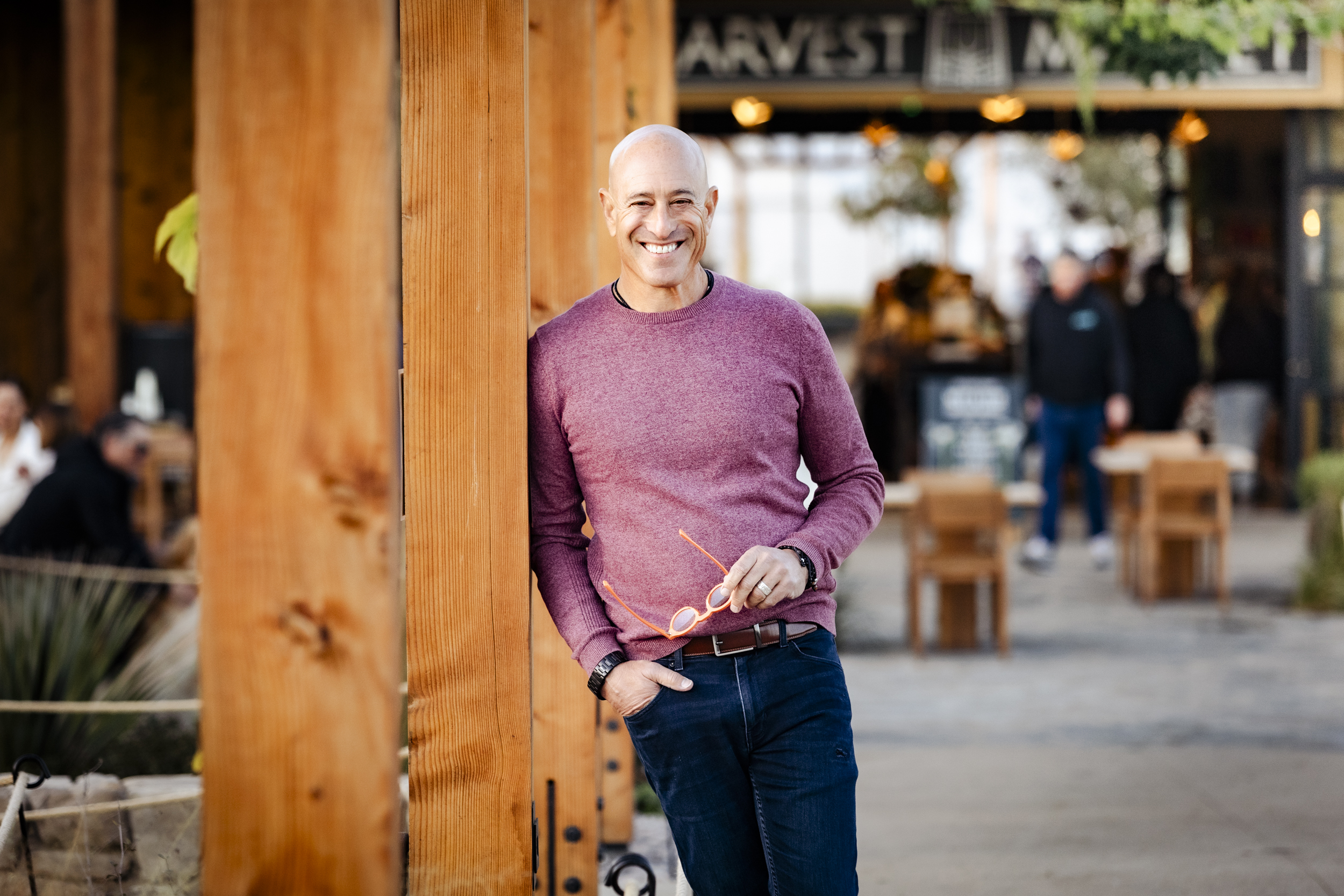
Build Momentum That Lasts
By combining practical frameworks with decades of experience, he transforms insight into systems that fuel growth, engagement, and long-term resilience.
Fresh Perspectives on Leadership & Performance
Mastering Strategic Communications To Navigate High-Stakes Environments With Chris King

.png)
.png)
.png)