
.png)



Overcoming Burnout And Loneliness With Nick Jonsson

What if the greatest threat to today’s executives isn’t burnout or failure—but the crushing loneliness no one talks about? In a captivating conversation, bestselling author and executive well-being advocate Nick Jonsson sits down with host Adam Markel to expose a silent epidemic plaguing the corporate world: Executive Loneliness. From elbowing his way to the top of his career to a devastating rock bottom that cost him his job, health, and family, Nick shares the raw, vulnerable story of his V-shaped recovery. This episode is more than just a personal memoir—it’s a critical look at the culture of invulnerability, the illusion of success, and the profound power of psychological safety. Discover why working hard isn’t always working smart, how repressing emotions can lead to physical illness, and the surprising, instantaneous way a corporate culture can shift when a leader chooses to surrender the fight and speak the truth. If you’ve ever felt isolated at the top, burned out from the hustle, or struggled to ask for help, this is the essential guide to finding resilience, building trust, and leading with genuine purpose.
Show Notes:
- 02:14 – The Burnout Experience: Not Knowing Any Better
- 04:12 – Day in the Life: The Insecure Overachiever Mentality
- 05:55 – Reaching the Top: When Success Isn’t Enough
- 07:05 – The Epiphany: Losing Motivation and Starting the Resignation Path
- 11:25 – Hitting Rock Bottom: The Psychosomatic Illness
- 12:10 – The Game-Changer: The First Honest Conversation
- 16:23 – The Surrender Moment: Acceptance as a Predicate to Recovery
- 19:12 – Defining Executive Loneliness: Isolation and Fear of Judgment
- 21:13 – Shifting Company Culture: The Need for Buy-in and a Champion
- 24:04 – The Power of Vulnerability: A Story of Rehearsed Suicide and Cultural Change
- 27:57 – Psychological Safety and Personal Transparency
- 33:23 – Building Trust: Getting to Know Each Other as Human Beings
- 35:38 – The Challenge of Remote Work: Loneliness and Social Health
- 40:07 – Personal Definition of Resilience: Falling Forward and Sharing What You Learn
Get the newest Change Proof Podcast episode delivered directly to you – subscribe here. And, if you’re enjoying the podcast, please give us a 5-star rating on iTunes! For instructions, click here.
How do we leverage continuous uncertainty to thrive in this unprecedented new world?
The answer is to build the resilience we need to power us through the challenges we face so that we become “Change Proof.” Prepare to tackle the future with confidence by reading Adam’s latest book Change Proof: Leveraging the Power of Uncertainty to Build Long-Term Resilience.
—
Watch the episode here
Listen to the podcast here
Overcoming Burnout And Loneliness With Nick Jonsson
It is Adam Markell. Welcome back to another episode. It is a great honor to be in the seat and to be your host. The conversation I am about to have is going to be spectacular. Let me tell you a little bit about the gentleman before he joins us. His name is Nick Jonsson. He is a bestselling author, entrepreneur, and the co-founder of Executives Global Network (EGN) in Singapore, Malaysia, and Indonesia, where he leads one of Asia’s most impactful peer networks for senior executives.
After experiencing a personal and professional rock bottom, including the loss of his job, health, and family. Nick rebuilt his life from the ground up and became a global advocate for mental health and executive well-being. His book, Executive Loneliness, became an international number one bestseller. His work has been featured in over 30 major publications, including Channel News Asia. He empowers leaders worldwide to overcome isolation, build resilience, and lead with purpose again. I am going to love this conversation, and you are as well. Stay tuned and welcome to the show, Nick.
—
Nick, I have just read your bio. I have just shared a little bit about you with our audience. My question is, what is one thing that is not included in your standard introduction bio that you would love for people to know about you?
What people should know is that I was born on May 1 in Sweden, and that is the Labor Day in Sweden and in many places around the world. As I grew up, my parents always said, “You’re going to be a hard worker. You’re born on Labor Day,” and so on. That is what they told me. If I am going back even earlier, I actually thought that the parades and everything that happened in Sweden on Labor Day was my birthday party. I felt very special.
That is right. It was just for you.
Yeah, exactly. That is awesome.
Nick, do you work hard? Was your mother right?
She was right. As we will talk, perhaps that mentality led me also to my knees. It led me to the burnouts of my life. Hopefully, I know a little bit better.
If you do not mind, can we go back to when you did not know a little bit better? Is that okay?
I would love to do that.
The Burnout Experience: Not Knowing Any Better
We are being a little cheeky about it, of course, but I think there are a lot of people who are experiencing tremendous exhaustion, depletion, anxiety, and depression. People are burned out, perhaps. I think it is an important word. I think it needs to be used. I do not want to miss the forest for the trees. People really are suffering. I know what that is like because I have been there too. I want to just get your experience of what that was like.
Maybe even if you can, now that the miracle of distance to look back. People, we are going through stuff, and we are all going through stuff at different things. If you live long enough and hopefully you do, then you learn there is a miracle in distance, in time, in space to be able to look back and see yourself at that point, what was going on? What was your mindset? What was dragging you or keeping you in that hole, that dark place?
There are two parts to this story as well. It is when I was born in Sweden, I grew up, and I lived in Sweden, and there, actually, I started my career as a construction worker. I worked in construction as a painter and so on. To work hard in those jobs meant I actually worked extra hours, and it meant signing up for working on the weekend. It meant dangerous jobs.
I signed up for epoxy courses and am doing nuclear power station jobs and those kinds of things. That was working hard, and that was all I knew. That was how I earned extra money. It was only after a motorcycle accident and having an injured neck and back that the doctors told me I could not continue to work in construction. I need to go back to school. That is what I did. With that, then I had a new career, and working perhaps hard in the professional world and as an executive is completely different.
For them, it meant working extra hours and so on. That was what I did. That did not lead me to a motorcycle crash, but I had my own burnout eventually. I am sure we will talk about that, Adam, because like many other leaders, perhaps I did not have the right attitude to ask for help. I tried to find answers within me instead.
Day In The Life: The Insecure Overachiever Mentality
Again, if it is okay with you, let us know what it looks like then? What was a day in the life like? Back at that point, I know for me, when I talk about it too, I am used to it because, of course, we speak about it as part of our work in the world, but it is still difficult. I still find it, when I am talking about it, that I can almost feel physical symptoms of the way I used to feel when I speak about it.
For me, I also come to terms with it. It is part of my book, my keynotes, and the work I do these days. I am quite vulnerable, and I share my story because I think I can learn from it, and others can too. It started at university, then. I remember being that insecure overachiever. I worked really hard to get a scholarship, and I wanted to top the classes.
I wanted to demonstrate that I was good enough to myself, especially, and then to others. I brought that winning mindset to the workplace. If I am looking at my corporate career, starting as an account executive, then account manager, account director, general manager, managing director, looking back at that, it was quite clear to me that I elbowed my way to the top. I did everything I could to achieve the targets, hit the KPIs, and impress the bosses.
What mattered to me was getting the right promotions and expanding my role. There was no external pressure. That was the pressure I put on myself. I wanted to achieve, and I want to demonstrate that. That was what was going on in my life. With that, I was very scared of being vulnerable. I was scared of explaining the things that I did not master. I was scared of asking for help despite having mentors and so on in my life. I just tried to prove to everyone and myself that I was good enough.
Reaching the Top: When Success Isn’t Enough
A lot of us are built that way. We could turn this program on if you and I, we probably have the qualifications to have this discussion, but let us just say we do not have the letters after our name, to maybe get into the full psychology of it, as to why we want to please people or want to achieve anything anyway. What is the underlying reason for that? I do want to dive into the fact that you, at some point, recognize that this was either not sustainable or, in the end, was not going to get you what you wanted. It sounds like you were to that point pretty successful and I appreciate very much the way you explained elbowing your way to the top to get the right promotions.
Not everybody, I think, even wants to admit that that is what they do, and it does not even mean just physically elbowing your way. It is all the little passive-aggressive things, it is the manipulations, it is the nasty behavior, it is the sabotaging of other people. There are a lot of ways to define elbowing your way to the top. You were effective at getting that done. At some point, was that not enough? Did you have some realization, the classic epiphany? What did that look like?
The Epiphany: Losing Motivation & Starting The Resignation Path
Once I had reached the top, there was no more goal to strive for. I already have the highest role in the company, the package that I was looking for. I remember having the big villa, the car driver, and everything provided for. That was what I was chasing. Once you have that, it is easy to lose motivation. That is exactly what happened to me. I start to ask myself, am I happy here? The answer was no. I remember feeling very lonely and isolated in the workplace because, with every promotion, I sort of got a bigger office, and there were fewer people at my level, fewer people I could share my challenges with.

At that last promotion, I remember getting a huge corner office and no longer being close to my team. Therefore, I was not invited as often to come to lunch and so on. I did not really reflect on it. I had my own lunch and kept working on, but eventually, I did not feel a part of the organization anymore. Rather than speaking about this and going to my boss or having a conversation, I remember making my own plans, and my own plan was to resign from the job and to start perhaps some startups and do some other things. That was the path I was on, but only in my head.
I remember holding onto the resignation letter for about one year, and eventually I sent it without having a proper discussion with anyone, without even giving a chance to my boss and the company to have a conversation. They were quite shocked and surprised when it came, and they said, “We have other roles in America. We have roles in Dubai. Is there somewhere else you would like to work?” In my mind, I was completely shut off at that time. I had rehearsed it a hundred times that I would just move on and do something else. Of course, all those other projects turned from bad to worse as well. I lost all my money. I lost my savings, and it was just a big mess for a few years. That is what happened to me.
It is interesting. I wrote a book in 2016 called Pivot, which is a book about reinvention and career in reinvention, but it applies to a lot of things, I think. It is something that is often associated with pivot, can be this, you think you’re in a bad place now? Wait. I do not talk about this quite often because the Pivot story has a happy ending, and I believe all the Pivot stories have happy endings, just as a footnote to that. Along the way, when you decide you are going to make such a radical change, for me, it was to give up almost twenty years of law, legal profession, and people saying, “You’re crazy,” and whatnot.
I ended up in the end being far better off than I was then for sure. If you get into the real move from 30,000 feet down to the ground, what you will see are some periods and days and times, weeks, months, even years perhaps, where it was touch and go, where things could have gone quite badly and did at times go quite badly. Tell me what that looked like for you, or if you could share a little bit about, as you say, you were searching and then in the process of searching for something, there was this cleansing out or clearing out of things like your money. That is hard, is it not?
Yeah. With that, I sort of pushed away all the people who challenged me or questioned what was happening to me. I gained a lot of weight, and people were asking, and also, my relationship was falling apart. We had been married for thirteen years, and when challenged about things, I filed for divorce instead. I was just not ready to have any conversations about it. That left me even more lonely, isolated, and separated from my ex-wife, who moved back to Sweden, where I was born. With our son, who was five years of age at the time, I was alone in Indonesia at that time, without a job and jumping from project to project, job to job. I lost my healthy habits. I replaced my gym routine and healthy diet with fast food pizza.
The gym membership was literally translated from a gym to a bar stool. With that, it was a slippery slope, and alcohol became something I used to numb myself to forget about the challenges. I told myself that I need to be out, I need to network. That is why I basically tried to be out as much as possible, but that was not fruitful, and it was ruining my health. I hit what we can say, my rock bottom in 2018. It was only then, after three years of losing everything I had in my life, that I was ready to turn my life around again.
Hitting Rock Bottom: The Psychosomatic Illness
In that moment, what was that like? Was it a moment, or was it just something that was like a slow-moving change of direction?
It was sort of that saying, I was sick and tired of being sick and tired. There was one particular thing that also scared me a lot. My left foot at this time was swollen, almost like an elephant’s foot. I remember going to do X-rays, MRIs, and blood tests. They checked for gout and all that stuff. They could not find anything wrong with the foot. It was later diagnosed by psychiatrists as a psychosomatic illness. Basically, something that has happened to me mentally. As I looked into this more deeply, it was because for three years I had basically declined any conversations about my feelings.
The Game-Changer: The First Honest Conversation
I was not discussing with anybody about what was happening to me. I just basically compressed all my feelings and emotions internally, holding it all in without dealing with it, apart from using alcohol and fast food to numb my feelings. That basically expressed itself by my foot getting swollen. That was as bad as I was at that stage. That is when things had to change. I basically at one point then sat down with a girl whom I had met. I asked her to sit down on the sofa. For the first time, I think in my adult life, I spoke honestly about my feelings to her.
That is a pivot moment for sure on an emotional level if we are congested in that way. I remember reading that there were two books that were instrumental for me in my pivot because, in my role as an attorney at the time, it felt like I had to always be on guard. I was on guard. I was trained by profession to be a warrior, to be adversarial. That just became a part of my identity and my persona. To move to a softer place or a less in control place. I am still like a recovering control freak. To make that change of direction, for me, it was very important to read other people, to read the words of other people who have experienced things like that or had some professional insight about it.
The Road Less Traveled by Dr. Scott Peck was the first book I read that really helped me. Later on, I read a book that I want our audience to hear, this title too, it is called Healing Back Pain. This is Dr. John Sarno. Why I am actually bringing this book up is because it is very much a book by a medical doctor who is deceased now and helped thousands and thousands of people who have physical challenges in their lives.
Back pain is just one of them, by the way. Healing Back Pain is the title, but it is really a book about the mind-body connection and what you were just saying, Nick, how when we are not able to deal with our emotions, whether it is that we are repressing them or we are unaware of them. That the body has this unique capacity, the mind has this capacity, the brain, to distract us from dealing with those very difficult emotions. It has lots of ways to distract you, frozen shoulder, knee problems, lower back pain, spasms, elephant foot, it does not matter. It is literally a way to keep you from dealing with emotions that you feel inside are unsafe.
Once you understand that is what is going on, it is like, I do not use the word miracle lightly, but there is something truly remarkable that shifts. These things, these non-structural issues, physically resolve themselves often because of the fact that you understand that the emotions are really what is at play. That is not easy, especially for people who are emotionally constipated, which is a lot of people. As one to the other, Nick, when you did experience that, sitting down and expressing yourself, how did things begin to shift and change for you?
It was the game-changer there because first, I grew up in a family home where we did not discuss our feelings. As it happened, the companies I worked with all had quite directive, strong leaders, but one-way leadership, and did not really have much vulnerability themselves in the organization. Therefore, I did not know what vulnerability was, and I also did not have the infrastructure around me with coaches and so on, where I spoke up. Once I opened this discussion. The girl who I sat down on the sofa that day is today my second wife. We’ve been married for seven years, and we have a wonderful relationship built on trust and always sharing about our feelings and so on.
Back then, when she listened to me, she did what most people would have done after she wanted to help and offered to help and listen with empathy. She took me to a doctor, who was long overdue for this, and shared honestly what was going on. I had been to the doctor just before with my foot, but when they asked me if I had any problems, if I was drinking alcohol, I just answered no to everything. She told the truth to the doctor. While I was uncomfortable sitting hiding in the corner, it was like I was exposed the second time, first to her, second to the doctor. With that, it was something that was lifted from me.
The Surrender Moment: Acceptance As A Predicate To Recovery
I say that I felt that day like I had a V-shaped recovery because as I was exposed, there was no more secret than the fighting, and holding it all together was gone. In the world of recovery, they call it surrender. It is a surrender moment when you sort of give up the fight, and with that, recovery can start. With that, my seven-year journey started, and including a meeting I went to the following week in a recovery group to deal with my alcohol issue at the time. Since I walked out of that meeting, I have not had a need or urge, and I have not had an alcoholic drink. That is what can happen when we sort of find ourselves in that moment of acceptance.
It is a surrender moment when you give up the fight. With that, recovery can start.Share on X
I am just struck by what you are sharing because I think often for people’s recovery, what creates recovery is that moment where you stop fighting. I see people, and I am speaking just about myself here. I was certainly resisting. I still find myself dealing with that on my own path. Where am I resisting or fighting to be right or to have things go my way or whatever it might be? Where that fight is often again associated with survival, it is associated with success, masculinity, I do not know. I think women fight a little bit less, but I am sure there are many exceptions to that general statement or stereotype. That surrender, acceptance, and willingness to stop fighting is really a predicate to recovery, is it not?
Yeah, it certainly is. It is about trusting the process. Many times when we are in a bad place, perhaps we lose trust in other people, and we lose trust in ourselves. I remember when I was at my darkest place, and I felt that the world had done me wrong. People had done me wrong, and it was everyone else’s fault. I saw a quote then by Mark Twain, and he said, “The more I get to know people, the more I like my dog.” I remember printing out that quote. I added to it under so that I do not even like dogs. That is what I wrote. That was the state I was in. When that is how you think about people, then it is very difficult.
Once you have surrendered and you realize that it is not only on your terms anymore, and you just start to trust the process and you trust the doctor when they are giving you something, you trust the recovery program, and you let others do that, then it is so peaceful. It is so nice, and then you can finally find a flow of life in that. It is, of course, also to perhaps connect closer to the source, the universe, or whatever you want to call spirituality. Some refer to it as God, others do not like that. That was also a source here. It was really to at least accept that I am part of something bigger and just to deflate my ego a little bit as well.
Defining Executive Loneliness: Isolation & Fear of Judgment
Executive loneliness, this loneliness. I want to get into that because while we have the time, your book talks about that, and this is something that you are well known for. Maybe define it and let us talk about what is happening in the world, especially a post-COVID work world that you and I both work in regularly.
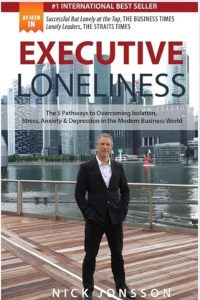
Executive loneliness is all about that isolation in the workplace. The fact that perhaps we do not trust someone to talk to about our challenges. We are scared of asking for help because we are scared of being judged. In my case, I was scared that I would not get the next promotion. I will not get the bonus if I am opening up about something I am scared about. The issue here is that many times, it can be very small issues that eventually become big. I have analyzed this inside out. If I look back at my corporate career, when I was at the top, when I resigned from that job, the incident that was the foundation of my resignation was that we were bidding for a new project.
I was good at business development. I was good at communication and so on, but I was not necessarily good at Microsoft Excel and the formulas and so on. In this bidding process, there were a lot of numbers, and I was anxious that I had made some mistakes. I wanted someone stronger in numbers and formulas to check it. I did not have the guts to go and ask for help because I thought, “As part of my role, I need to be good at numbers. If I expose myself here, maybe something will happen in the future.”
The fact that I did not ask for help at that time, I carried with me the whole time. I started to think there must be some problems in the formula. Maybe they find a mistake, and if they find a mistake, then I will be terminated. That is exactly what executive loneliness is, and it is about the company culture. We as leaders can set up a company culture where people feel safe to be vulnerable. I am re-linking it with psychological safety here, of course, as well. Executive loneliness really is when we do not have someone to speak to about our challenges, who dares not to open up and ask for help.
Shifting Company Culture: The Need For Buy-In & A Champion
Because we both work as, in addition to being speakers, keynote speakers, we do consulting work, and that is a great honor to be embedded within the organization and its leadership teams, because it is like being asked to join a family. It may be a dysfunctional family, but like all families are. It is not that it is not that unusual anyway. Let us say you are in that family for some period of time, and you recognize that there is this culture that you are talking about, where people are lonely. People do not know it or do not admit it.
They are keeping their cards very close to the vest because again, they are afraid. They do not trust. They do not provide feedback. They are not regularly getting feedback or giving it in a way that is healthy for everybody. I am describing a very large endemic issue. If you were going to make a change or propose something that would help that culture to slowly shift, I do not believe that there is a V-shaped recovery for that type of thing. It is a slow slog. They either are willing to put in the work to do it, because when we are talking about our services, we never sell them as sort of like instantaneous solutions, because I think that would be misleading to say the least.
You cannot see great changes happen suddenly can happen when people realize something has truly shifted. To you, I would ask, we are thinking about advice in that arena. Is there something you focus on first? Is there a sequence or even a philosophy that you share with the leaders that you need to get buy-in from? At our work, we know you need a champion, you need a budget, of course, but you need a champion. You need people who are going to lead this change and champion it.
Otherwise, they will spend money on things and initiatives and workshops and whatnot and get very little out of it, which is unfortunate. I heard this old joke about, and it was not Mark Twain that said this, because I do not know that consultants were a thing in his day, but the consultants are like seagulls. They come in, they fly in, they shit all over everything, and then they fly out, fly away. We like to do better work than that. I know you do too. Back to you on that. Is there a way that you can frame that conversation to help people understand that the culture must change, but also, here is what it looks like to start that process?
Yes, absolutely. I did some surveys and interviews around the book when Executive Loneliness came out in 2021. What I found out was that about 30% of the people I surveyed, actually, the senior leaders, found themselves isolated or suffering from loneliness in the workplace. With this, I realized it is a major issue. It was not only me who had those feelings. The last question, though, was a box for people to tick if they wanted to be interviewed. I interviewed a lot of leaders for the book, and the book is full of stories. I can mention one particular woman I interviewed for the book.
The Power Of Vulnerability: A Story of Rehearsed Suicide & Cultural Change
This was a lady, a managing director for a big international bank in Singapore. A woman in a man’s world, highly successful, two children, husband, all the perks that you can imagine, including a nice house in Singapore, driver, car. An apartment gym membership looks good and has everything. Many people aspire to and look up to her. When I interviewed her for the book, as soon as we sat down, she basically held her hand on me, and she started to cry. Before I could ask a question, she said, “Nick, I rehearsed my own suicide twice.” She had been waiting for this moment to share with someone.
She took the chance for this because she knew about my story, then she knew about the topic for the book, and so on. I gave her a moment to cry, and I held my hand back on her, and then she started to speak. She said, “Nick, I cannot imagine that I said that. What was I thinking?” She was basically surprised with herself, shocked with herself that she had gone down the path to rehearse her own suicide twice. She could, at that time, explain very vividly to me exactly the location, the building, the date, the time, and so on. This was very real for her. What was not part of her plan was that I would reach out and ask for an interview about this book.
What I learned, and I am studying psychology, actually at the school, I learned that people who are at that stage are actually open to other solutions. Ending their life does not have to be the only solution. If you give them another chance, another option, they will take it. She had jumped at another chance to speak about it. She saw that this was a chance. What happened then was that I had a counselor on standby who came and talked to us, and with his permission, we also called the husband, who came and joined. The husband was shocked and surprised and could not understand what was going on here, but also relieved that we had broken this pattern.
What happened with this case, and the reason I share that is that she later on took some sabbatical leave, and she continued to do the deep work on herself and identify what happened here. How has it gone so far? Just like in my case, it was something minor. It was in her case also. In my case, my fault was a spreadsheet and some formulas. In her case, she had a small accident that gave her a small scar on her lip, and she had a small surgery and a few stitches. She said, “When I came into the office, I felt ugly.” She said that she started distancing herself from her colleagues. She did not feel comfortable going out for business lunches with clients.
At home, then she told her husband or dared the husband to leave her, pushing the husband away. Suddenly, just after a few weeks, she started to really start sitting by herself. It is a bit like me in the office, not going out with her colleagues for lunch. Before she knew it, these kinds of thoughts came and crossed her mind and into her head. That is how she explained the story, and her story is in the book. I also continued my discussions with her. Eventually, she had enough courage to share her story in an all-hands meeting with her bank in front of everyone, who had no idea that she had gone through this.
As she shared her story, I can say that was a V-shaped culture change over the day. As she shared her story with everyone, people were crying, coming up, giving her hugs afterwards, colleagues in her team came up to her and shared what they had been going through. Some other senior board members also shared that they have gone through some difficult times in their lives. As she said, the culture changed overnight, and from closed doors to open doors, some people were really warm and open to each other.
Magic can happen, but the point with this story is that it can also go bad very quickly with small things we do not speak about, we do not talk about. These small things, we need to grab them right away before we start to isolate them, before they can get to the worst place. That is just one story, Adam. I am happy to share more on how I am working with teams on overcoming this as well.
Psychological Safety & Personal Transparency
I would love to talk about psychological safety. I just contribute to the mix here. I gave a TED talk some years ago where I cheered up a time in my life when I was so on guard and holding on so tightly to this persona that I ended up in the hospital on a Saturday instead of being at our son’s baseball game, and having numb tingling in the tips of my fingers, and I was sweating uncontrollably. My heart is pounding so hard it does not even feel like it is in my body. My wife is there, and we are waiting and waiting and waiting for a doctor, and the doctor, the first thing he says when he comes in, says, “Mr. Markel, there’s nothing wrong with your heart. You’re not having a heart attack. What you’re experiencing is a fill-in-the-blank.”
He said, “You’re having an anxiety attack. You’re having a panic attack,” which was a new term for me. I had not heard that term at that point in my life. I share this story on the TED stage. The video is published on YouTube and gets a lot of views, and then I am contacted by a woman. When I speak about this, I give her the name Denise. It is not her actual name, but she is the CEO of a big hospital. She says, “I would love to talk with you. I need to talk because I had the same thing happen to me.”
We set this call up, and I asked her a few questions, and she says, “You and I think we’re very similar.” I said, “Tell me more.” She starts to tell me the details of her life and whatnot. I said to her, “It must have been odd for you to roll up to your own hospital and go through your emergency room and everybody to see you the way in the condition that I remember being in it was pretty rough.” This is what she said to me, “I drove a long way, at a long distance to get to a hospital where nobody would recognize me.” That was her answer. With those symptoms, thinking she was having a heart attack, she drove herself to a hospital far away, where people would not know her. I realized, yeah, we are very similar, you and I.
My advice to her was advice that I was given by my brilliant wife, and she always has sort of a very grounded approach to things. Not perfect, nobody is, I am not, certainly. Very grounded, and when she said to me after that event in my life that I should talk to people, I should tell the other lawyers, or I should speak to somebody who might understand what, and I wanted to have nothing to do with it. I would not talk to her, I would not talk to anybody, I refused. In fact, two weeks later, instead of being at my son’s baseball game, I ended up in my office. That is where I was on a Saturday, instead of being there two weeks later, because to me, the answer to the situation was not to figure out why I ended up in the hospital.
The answer was to work harder so that I would avoid ever having to go to the hospital. I said, “I’m in the hospital because I’m worried. The way to relieve my worry is just to be better at the game. Win the game, then you have to worry.” Simple. This all made sense to this lady. She was wired similarly to me and thinks similarly to you and the people you are talking about. I said to her, “You need to get your team together, your senior leadership team together.” It was a group of about ten people, and you have to tell them, “This is the prescription. You have to get them together and tell them about this event that occurred for you.”
She was very adamant, as I was, that this would not be something she was interested in doing. She said some other things I will not say on the air, but I was very tenacious. I would not give it up. I told her, “It’s the only way I’m going to help you. If you do not do it, that’s fine. Of course, I wish you the best.” She did. She did agree and got her team together. What is remarkable, Nick, is that it is a very similar story, very similar outcome anyway, to the story you shared, which is that when she told her team about this. They were very empathetic, as you would imagine. A great deal of understanding and compassion, all that stuff.
Nobody would be surprised to hear that. The thing that was a bit very surprising, actually, was that these folks began to tell her after she told them those things. They began to share with her some of the things that were going on in their real life outside of work, but even in work, things that this lady CEO had no clue that some of these people she had been working with for many years and did not know about things to do with health issues they were having or challenges with their children or elderly parents or money worries, like really important things.
What ended up being the through line to all of that was that her transparency with them created the most important thing that you brought up earlier. I want to get your thoughts on this word. It created trust in and among those team members because they trusted that they could be real with her because she was real with them. That was quite an instantaneous shift in something that she had been working on for many years to establish and really had not done well at. When we talk about trust, we talk about psychological safety, which to me is synonymous with that word.
We come up with new words for things. That is part of the way we evolve. What are you learning? I know you are studying this. What are you learning about creating psychological safety in the workplace when people, frankly, do not trust that the person they answer to or the others in the organization will not just decide to stick the knife in them? I do not know. I am using the most extreme example.
Building Trust: Getting To Know Each Other As Human Beings
You’re spot on here, Adam. I think there is a big lack of trust in the workplace these days, especially between the different generations. We have the old generation and the younger generation, and they do not get along so well. I think it is because what we are doing in the workplace is superficial. We are just saying hello. We have very shallow conversations. We do not actually know exactly what you said. We do not know each other. The first thing that we need to do is actually get to know each other. I do a lot of team-building events with leading MNCs, especially with teams, leadership teams, and the CEO has to be there. Where we basically are getting to know each other, it starts with team building.
What I typically do then, the first hour is sort of my hour when I share my story a bit, what I shared, I shared a story, a couple of the stories that I shared with you to set the stage here, basically for people to be vulnerable. As I am the one who is leading the workshop, I have to be vulnerable first and then it is over to them and then they divide them in pairs and they need to share what you asked me also Adam, you asked me what is it that people do not know about me, but I actually asked them what it was the most difficult point in your life. What did you go through to take them into a challenging place and share something that people did not know? Once we do that, you will start to see a lot of tears. They are connecting heart to heart, which I have never done before.
Once we have that connection, when they come back into the workplace, they do not just see the other person as someone behind the desk. They see them as a human being because they know what that person is going through. That is just the first step that we go through to set that stage and the trust. We keep working on that for a day or over several days. We call it team building. We call it that we are making each other better by getting to know each other.
We do that by setting different steps and formulas to actually force it out because people naturally will not share this stuff anyway. I just want to say also, I do not believe in oversharing. I do not believe in being overly vulnerable to come into your office and scream out all your problems to everyone. They will start gossiping and feel overwhelmed, and so on. To do this in a safe space, when we do a workshop where we actually get to know each other, I think that is fundamental for any team. If you expect them to be what we are talking about, a team that can deliver and that you feel safe in.

The Challenge Of Remote Work: Loneliness & Social Health
Maybe this is the sort of one or two questions more, but in a remote world or in a world where remote working has become quite normal, and even hybrid situations are also frequently found. What is your advice? I know this is a difficult question, but I just want to get your insight on this because it is challenging that we see loneliness. Loneliness is on the rise. Many statistics have shared that, not just executives, by the way, but loneliness across the board.
I personally think that the pandemic exacerbated that. I do not think there is anything insightful that is quite obvious. The remote world, which is beneficial in many ways, and I have worked remotely for many years, is a challenge to what you are talking about, to really be able to get to know one another, to not be, you just cannot walk across the hall, sit down in somebody’s office and say, “Can we talk?”
In the break room or lunch or whatever it might be, because you are 150 miles away from someone else and you see them through this little box, you are staring at a little box all day long, one little box to another little box, you get in a little box, all that good stuff. That is pretty lonely. It can be lonely. When you are advising teams on how to incorporate and bring those people in, what thoughts, if you have any thoughts formulated on that challenge, I would love to hear them.
I think there are two parts to it. If we are a hybrid or a virtual team, even more important if we have the capability to get together, even if it is once a year or so in person, and then do it in a meaningful way. Do not just do team bonding. Team bonding is going out for a karaoke night and having some fun. That is important too, but do some proper team building first, do the deep stuff that we discussed here, get vulnerable with each other. If you, as a leader, do not know how to do it, then Adam and I can help the teams.
That is what we help teams with to say, to help them to get this on the table. If we connect deeply, even if it is once a year, we will remember that. When we see that box on the screen, we do not only see them in the box because we know what they are going through. We see them as human beings, and that can last for a long time. I think that is one aspect that we can work on. Also, I think it is up to us. It is about self-leadership. I talk a lot about social health. There has been in the past, it was physical health. We start to understand that we need to exercise. We started to talk more about mental health, but what I really talk about now is social health in this hybrid world and digital world, social health.
Just like we need to be disciplined by exercising or moving a little bit every day, we need to look after our social health. If someone is working a hundred percent remotely, then we need to be disciplined to block 1 or 2 hours every day for some social health. That can be one day going for a walk in the forest with a good friend, whom we trust and with whom we are vulnerable. Another day it can be to support a charity or belong to a club.
I am now 50 years of age, and no matter where I go, I look up clubs and associations, and I have memberships all around the world where I belong to sports clubs and associations with my academies and so on, especially because I am an introvert working remotely. I am very comfortable working at home, working remotely. I need to make sure I put this in the calendar, and I just show up because then I get to meet people and I get much healthier. We need to be quite proactive about that, I believe.
We do. It really is true. There are so many ways we could approach that topic. Maybe we will do a part two for this episode because I would love to talk to you more about social health. I myself am also an introvert. I understand if you do not put it on the calendar. The things that you talk about, we should get together, we should have drinks, we should have coffee, whatever it might be, whatever the thing is on the calendar, music or art or something.
You do not put it on the calendar. It just does not happen. I do not know, for the people listening to this, you may not. Maybe you are in your second decade or your third decade of life. It took me probably 3 to 4 decades to actually learn this lesson. It is truly wisdom, and it is not for me. I am just passing it along. Truly, if you do not put it in your calendar, it will not happen. If something is important to you, put it in your calendar. If it is not important to you, then do not pretend it is important to you.
There is a little coaching advice. We only have so much energy, and why squander your energy, waste your energy on things that you say are important, but really, in actuality, are not? I just want to tell you, Nick, you are an easy person to talk to, and I talk to a lot of people. I have enjoyed this very much, and I would love to have our teams create a second opportunity for us to continue our conversation. Thank you.
Very good. I very much enjoy this as well, Adam.
Personal Definition Of Resilience: Falling Forward & Sharing What You Learn
I just want to end the show without asking you for your personal definition of resilience. That is my last question to you.
As I am studying psychology now, I believe that the most important thing with resilience is, as I say, you fall on your face many times in your life. As long as you fall forward, you can get up, and you can continue your journey. We are all going to fall over so many times in our lives that we might just accept it. It is what we learned there. There is a lot of talk about failing forward or learning forward or whatever it takes, but just keep moving. That is all it takes, and share about it to wrap up with what we talked about. Be vulnerable and share what you learned so that you can help others as well.
Time and distance, time and space, you will see it as this magical way of making everything just perfect. You have ended up exactly where you ought to be because those things have occurred, not despite them. Once again, Nick, thank you so much to our community. Of course, there will be a postscript that you guys will stick around for. If you want to find out more about Nick, our show notes will have information about him as a speaker in his work in consulting, about his book from 2021, but also, I think the new book is coming out too. Lots of great stuff there.
If you have got questions or comments, you can go to AdamMarkel.com/Podcast to leave your comment or question there for Nick or me. Lastly, we just really make the request that you can rate the show. If you take the moment to do that, I know it is a moment, another yet another moment out of your life, but it is super helpful to us because it helps the algorithm to point other people in the direction of this content. That we can just say nothing, but thank you for that. I will say ciao for now. Thanks again.
—
No surprise. I do not know. This episode was rescheduled a couple of times, but we kept after it, and I am so glad that we did. I just feel so good that this conversation ultimately happened and that we all get to experience it together. He is very easy to talk to, and you have probably heard that. I try to vibe with all the guests, but as you would imagine, not everybody is. We do not fit. Our little puzzle piece does not fit with every other puzzle piece. That would not make any sense. We are all pieces of one big puzzle. Here is a spiritual segue. There are no missing pieces.
There are no pieces that do not belong, that do not have a place. I do not know that every single piece is meant to fit together with each other, with every other piece. I think we know that. There are some people we just can vibe with and have things in common, and we just know we could be friends. We could have a relationship over the long haul because there are where you feel simpatico with somebody. Sometimes I truly believe you know that instant. There is that old love at first sight kind of thing. I think I was blessed when I met my wife, and we began to spend time together.
It was that very quickly. It’s very intense love right out of the gate. I know that happens sometimes. It takes time for those things to happen. Certainly, love has evolved over time, so it has not stayed the same. All of that is true. I will say that in this instance, this was just the perfect fit for me in this moment. I hope you feel like it met you exactly where you are in this moment. Maybe you know somebody, if this conversation is around mental health and loneliness, and around how we spend so much of our time in a state of guarding what is ours or guarding what we have worked to make ours.
If that is not really a relevant inquiry for you at this point, maybe you know somebody who is in that state that you could tell that they are just on edge or exhausted, even burned out from the effort it takes to hold that, to protect, always being impervious to things that could make you otherwise vulnerable. That is a lonely path. It may seem like that is the only path to get to where you want to be, to succeed in whatever it is that you define that term. I am reminded of something that I read almost every single day from Emmet Fox, who is a metaphysician from many years ago, and his books have been impactful to me in my life.
He says that we can sometimes all want to be successful, but if we try so hard to be successful, we are almost certain to make sure of missing that success. We try so hard and make hard work of it when the riddle or the answer to the riddle or the paradox is that we have to make easy work of it. That we make light of our work without it being lazy, dropping the ball, or losing our focus. We have to be able to be focused and be intense and be hardworking and all of those important qualities, and yet be loose at the same time, be light. Be able to laugh off the annoyances and the inconveniences because otherwise, we are truly making hard work of it, and over time, the toll that takes on us is pretty intense.
That is what Nick was sharing today because it takes a toll on us in different ways. Some people really hit rock bottom. They do. They wipe out physically, mentally, emotionally, spiritually, and others just lead lives of quiet desperation or lead angry lives or lives where they are lonely for such a long time and contemplate awful endings. It is vitally important that we have these conversations, that we discuss things. To find the right partner for that discussion was just perfect.
I am very grateful to the people who put this together and to Nick, of course, and to being able to just sort of turn on the camera and the microphone and be able to talk about important things as though we have known each other for ten years or something. I hope you love the episode. If you do know somebody who would also really get something out of it, please feel free. Please share the episode with friends, family members, colleagues, and whoever. We would love to hear from you as well. Your comments, your thoughts, your ideas, your questions, whatever that might be. With that, I just say, I wish you a beautiful day, evening, wherever we find you at this moment, blessings to you. Thank you so much. We will see you again.
Important Links
- Nick Jonsson on LinkedIn
- Nick Jonsson on Facebook
- Nick Jonsson on Instagram
- Nick Jonsson on YouTube
- Nick Jonsson
- Executive Loneliness
- Pivot
- The Road Less Traveled
- Healing Back Pain
- Adam Markel Podcast
About Nick Jonsson

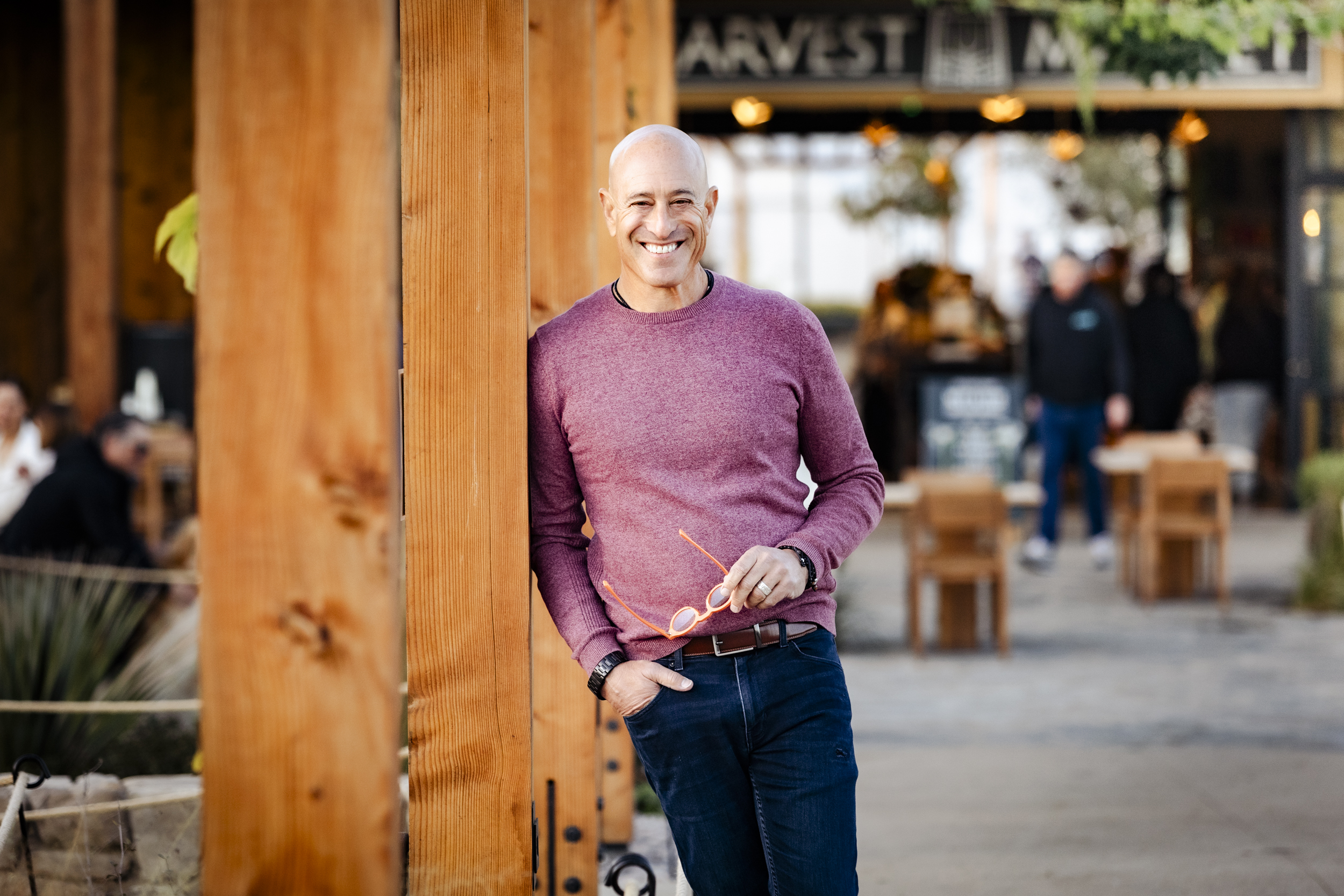
Nick Jonsson is a global keynote speaker, bestselling author, and mental health advocate redefining what it means to lead in the modern world. Ranked the world’s #1 thought leader on Executive Loneliness, Nick has spent the past decade breaking the silence around isolation, burnout, and addiction at the top levels of business. Today, he takes that work further by championing Holistic Leadership™, a model that integrates physical, mental, emotional, psychological, and social well-being with professional responsibility.
Nick’s signature framework, The 5 Steps to Holistic Leadership™, Surrender, Connection, Purpose, Goals, and Discipline, provides a practical roadmap for leaders and organizations to achieve sustainable performance. His approach helps executives move beyond destructive patterns, discover authentic purpose, build connection, and create balance across all areas of life. Backed by global research and lived experience, Nick demonstrates how holistic leadership not only strengthens individuals but also drives measurable organizational outcomes: increased engagement, productivity, and retention.
Build Momentum That Lasts
By combining practical frameworks with decades of experience, he transforms insight into systems that fuel growth, engagement, and long-term resilience.
Fresh Perspectives on Leadership & Performance














.png)
.png)
.png)