
.png)



Optimize Your Performance and Vitality Through Advanced Metabolic Health Testing with Mauro Stara

Reclaiming your vitality and optimizing your performance starts with understanding your metabolic health. Host Adam Markel is joined by Mauro Stara, founder of Six Pack CEO, a Peak Performance expert and trusted advisor to successful CEOs and business owners. Mauro, known as “The Last Resort,” dives into prioritizing advanced blood work and personalized coaching to tackle the root causes of stagnation, such as hormones and poor metabolic function, which traditional approaches often miss. They explore the vital connection between understanding critical blood markers like homocysteine and lipoprotein(a) and making intentional, empowering choices—the powerful “why”—to achieve lifelong, sustainable transformations and reach your full potential as a leader.
Show Notes:
- 03:10 – Understanding Metabolic Health: The Root Cause Of Disease
- 06:28 – Taking Control Of Your Health: Beyond Acceptance
- 10:30 – Advanced Testing Demographics: Why The 40+ Age Group Is Engaged
- 17:29 – Critical Blood Markers Overlooked: Homocysteine & Lipoprotein(a)
- 22:10 – Accessing Advanced Blood Panels: Ordering & Doctor Trust
- 27:48 – The Awareness Factor: Knowing The “Why” Changes Everything
- 31:02 – The “Why” In Health: Fueling Your Body With Intention
- 33:19 – The Value Of Coaching: Beyond The Plan To Behavior Change
- 38:46 – Connecting Health To Peak Performance: The Olympic Mindset
- 44:32 – Legacy And Prevention: Mauro’s Personal Motivation
Get the newest Change Proof Podcast episode delivered directly to you – subscribe here. And, if you’re enjoying the podcast, please give us a 5-star rating on iTunes! For instructions click here.
How do we leverage continuous uncertainty to thrive in this unprecedented new world?
The answer is to build the resilience we need to power us through the challenges we face so that we become “Change Proof.” Prepare to tackle the future with confidence by reading Adam’s latest book Change Proof: Leveraging the Power of Uncertainty to Build Long-Term Resilience.
Watch the episode here
Optimize Your Performance And Vitality Through Advanced Metabolic Health Testing With Mauro Stara
Everybody, welcome to another episode of the show. I am so happy to be in the seat and really excited for the conversation that I am about to have. I’d like to share a bit more about this person by reading his bio, and then I’ll dive right in. His name is Mauro Stara. He is the founder of Six Pack CEO, a peak performance expert, and trusted advisor to successful CEOs and business owners, known as the last resort.
For those who are exhausted from Main Street approaches, Mauro specializes in resolving challenges where others have failed. Prioritizing advanced blood work testing and personalized coaching, he tackles the root cause of stagnation, hormones. With his guidance, clients achieve lifelong sustainable transformations, reclaiming vitality and confidence amidst their demanding schedules. That is a lot.
We are literally going to dive into some of the granular aspects of it and how it is that we can move the needle for our own personal health and well-being, as well as our performance as leaders in business and in every other area of our lives. Sit back and enjoy my conversation with Mauro.
—
The Core Value That Drives Success: Persistence
Mauro, I know you hear your bio, your introduction, read or said frequently. My question to you is very impressive. My question is, what is one thing that is not in your bio? One thing that you would love for people to know about you at the start of our conversation.
One of our core values in business, one of my personal core values, is being persistent. I just made a post about it. I have found in life that every time I have stayed persistent and did not just accept a no and turn it in, and not now. It has opened so many doors and so many opportunities across my life, whether that is personal or business. If we read the book by Chris Voss, Never Split the Difference, it talks about it there. He loves to know because he knows, the no means I need to come up with a better offer, a better idea, and eventually can turn it into yes, more so in business. I found that philosophy has helped me a lot in solving problems, advancing in business, and advancing my personal life.
I have not read that book. Would you say it again, just because we will pick it up for the notes and show notes, and folks who may want to get it?
Never Split the Difference by Chris Voss.
The through line of that book sounds fascinating. I am just curious if you remember, is that not a compromise? I will just say this. I was a lawyer for almost twenty years, and splitting the difference, if you will, when it comes to negotiating or ultimately settling disputes, is an unfortunate aspect of what I have seen in that profession quite frequently. What does that really mean? Not to compromise?
Chris would agree with that, but if I had to sum it up, I do not like the title as much. It is more so the basic and advanced negotiation tactics and getting a deal that both parties are happy with. I would not say never compromise. He did give the example where he does not like meeting in the middle. It is as if the wife says, “I do not like those brown pair of shoes.” The husband says, “I really want to wear those black shoes.” He will have one brown pair and one black, and nobody is happy. He gave that example of why he does not like to meet in the middle, but that is just one part of it. I just think it is more so negotiation tactics and being able to communicate ideas better, showing empathy. I do not feel it. The title does justice to the value he gives in the book.
Understanding Metabolic Health: The Root Cause Of Disease
I loved what you said about the idea that if in the process you are diluting your value or diluting what would otherwise be your standard somehow in contributing something just to get a yes or to get over a no or something like that, that probably would not be a great process for bringing out the best in you or bring out the best in your team or in the organization. I am going to get the book. That is fascinating. Again, my question was really more just to look into that concept because I think so often it is we really do sell ourselves on a certain frame to see things, and whether it is how we see our bodies, or how we see other people, and how they view us.
Maybe that is a good way to get into the work that you do, because in many ways, you are involved directly in how people are feeling and how they perceive their health or how they are experiencing their own health. I want to talk about that because I think that is one of those things you and I chatted about before we hit record. There is a woeful lack of understanding of health in our world, not just in the United States and where I know you are in Mexico at this moment, but throughout the world.
That is a shame. I was saying to you, I read a book by Dr. Casey Means called Good Energy. I know you have seen a little bit of it, but basically, it is a book about metabolic health, and it really debunks a lot of work. It pulls back the shade on a lot of things that people just do not understand about their own health. With that, and it is a generalized statement, maybe introduce to our audience a little bit of where your focus is in that area.
In regards to energy and metabolic health, or general?
Metabolic health. I want to unpack some of that with you.
I would say it is like one of the core principles or core things we look at and simultaneously it is one of the root causes, if not the biggest root cause of many health issues, health complications, diseases in today’s world when your metabolic health is not optimized, your insulin resistance, triglycerides are high, inflammation is high, blood pressure is high. Those are all things we can control. That will just amplify many things in a very negative way. It is all a spectrum. If it is a little bit, it is not going to be a big deal, but the more we move to this part of the spectrum, the worse it is going to get. The beauty about it, as I said, is in our control through our lifestyle.
Taking Control Of Your Health: Beyond Acceptance
Do you agree with what I said about people just not really having a great understanding of their own health and what they can contribute to create actual better health? Folks will often say, “My this, my that,” they own their conditions. In many ways, I think people have just come to accept those conditions in their lives. I do not know whether it is back pain or it is other aches or it is arthritis, it is diabetes, or it is whatever those conditions are. It is being heavier than they think they are, than they could be, or what have you.
I am just curious, like do you believe that people just are lacking in understanding if they could only understand their bodies and their metabolic health and those other medical terms, which we could talk a little bit about, so people can get a greater understanding, but the blood levels and the things that you measure. If they understood those things better, would they really have a hand in changing their health outcomes is what I am asking you.
Absolutely. I believe people have a higher level of awareness happening over the last 4 or 5 years, where people discover more and more how powerful blood testing, genetic testing, all the tests, and all the information can be, especially with the distrust and authority that happened and the shift to autonomy over the last 4 or 5 years. Just the expansion with AI, biohacking. Just before this call, the client texted me, he is in Austin right now at a biohacking conference, and there are all these gadgets and tools.
There is a higher level of awareness there. Most people know that they should eat better. They should sleep better, sleep more, walk more, and exercise. They know those things at a fundamental level. They know that it will impact their health and how they look. I just believe that they do not know how much more they can do, not just with those things, but by dialing it in a little bit more and focusing on certain protocols that can reverse or make symptoms better for certain conditions.
For example, you brought up back pain or arthritis. If someone genetically has very poor genes for oxalate metabolism or just oxalate sensitivity, and their diet is full of oxalates, which may be on paper healthy foods, like spinach, almonds, sweet potatoes, great foods. For that person, it would be very bad and could cause back pain, joint pain, hip pain, brain fog, and digestive issues.
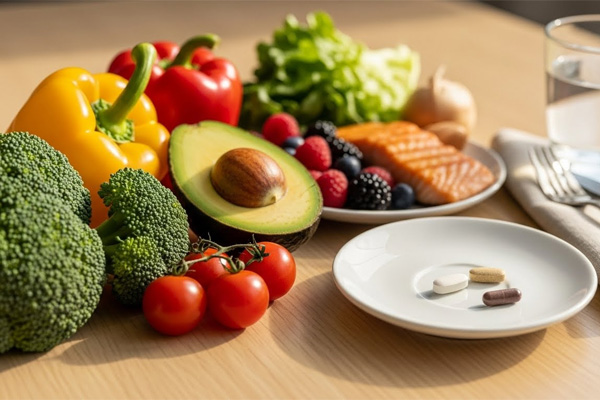
Understanding that and understanding, “This is not aging, this is not something I was born with. I have control over that.” I believe people are slowly but surely shifting in the direction that they understand that diet and supplementation and sleep and other lifestyle practices are not just for vanity and feeling a little bit better, but I do not want to say reverse conditions because that may be a stretch, but definitely make symptoms of certain conditions better and potentially reverse certain conditions.
Let us say this. If you are pre-diabetic, it does not mean you have to become diabetic, right?
Not at all, no.
Advanced Testing Demographics: Why The 40+ Age Group Is Engaged
There are a lot of people out there who are pre-diabetic. Some of them, as they know it, others think that it is just like they are walking around, but do not realize that it is the case. It starts really young. Tell us about the blood testing and let our audience know which demographic is leaning most into this, open to this. Where is the book of business, if you will, for this at the moment?
Most guys that we work with are 40 to 55, 60. That is like the ballpark range, and we have younger guys, and we have got guys up to 67 who are crushing it. I found that usually 50-plus have more urgency to do this and a higher level of commitment. Even though their speed of success may be a little bit slower than someone at 30, it is still faster because of the level of urgency and commitment they have to make a change. They have less time.
They have more miles on their body. Where I believe in terms of openness of advanced testing, you will not always, but sometimes, people under 40, just because the generation 50, 60 plus, to some level, they still have a big trust in authority. My doctor said, I am fine. This means I am fine. He just checked my sugar and my lipids, and everything is okay or normal, but normal does not mean optimal.
Normal doesn't mean optimal.Share on X
That has just been ingrained for so long that he would tell me if something were wrong. He would tell me if this were the case. We fail sometimes to understand that those people are here to prevent you from dying or getting really sick, but not here to help you become optimal or catch things 5, 10 years before they pop up.
It really is. We are in a fascinating time. My wife had thyroid cancer about 25 years ago. She had her parathyroid removed. She has been on some thyroid replacement medication ever since. She is a bit of a science experiment, like a chemistry experiment in terms of hormones and things, for a long time now. Recently, she started consulting. Not only has she had many doctors along the way, but amazing people have helped her a great deal. She has also started to read more herself and even asks about using AI tools and others to examine certain things. When she gets her blood tests and her results, she is not just listened to simply to what her doctor would say, but she is also looked beyond that and asked for more information so she could have a greater understanding of what those things mean.
Fundamentally, that information has been very empowering for her. She speaks to that much better than me. I know for myself that even just having gone to get a physical recently and coming in to ask my doctor specifically to be checking certain things and to ask whether or not the blood work that she was ordering for me would include those tests. Just that conversation alone. Most of what I was asking about was part of what she was going to test for, but not all of it. We had an engaging conversation about some of these things. That was the first time that I felt like I was on a level playing field. She is a doctor, I am not, but we were having a conversation about my health differently.
There is no downside to that to start with. The understanding that you can learn more, even if you are not a doctor and you do not have that kind of training, is so easy now to receive insight that can help you to understand whether or not you should be eating what you are eating. Whether that is either exacerbating certain problems or challenges you are having in your health, or would alleviate those things.
It would be better to be engaged in that process as opposed to simply going, “I have always done it this way, or my doctor says I am normal, or I am within a range and feeling like that is okay.” To me, to just go back to the very beginning of our conversation, that feels like splitting the difference. That feels like diluting the possibility of the health that you can have. Ultimately, to me, health is only good or important insofar as it provides energy for things in your life that you want to do or the value that we are all here to contribute.
If your energy is low, or it is bad, or you do not have the capacity any longer, or you are not optimizing what you are capable of producing from a thinking standpoint, from an acting standpoint, from a feeling standpoint. The rest of the world, your family, your business, the people you work with, other people you will never meet, but everybody is at a loss because you are willing to settle on something less than what is possible. The times have changed, and that does not have to be the case anymore.
I love how you tied it back to the book, and I absolutely agree with you. There is absolutely no downside to having that conversation and playing with open cards and an open book and testing it and doing one, two more tests. Even if it is just one, two tests, there is no downside at all to it. The more information you have, the right type of information, the more you can make informed and proper decisions.
Critical Blood Markers Overlooked: Homocysteine & Lipoprotein
If you are going to recommend tests to people who are going, let us get a little granular here, and not everybody is the same, we get that. If you are going to say, “Listen, there are some basic tests that everybody should be having, and then therefore being able to follow up and understand better, what are those tests?”
We have a panel of 97 markers, so it would be a lot to list those out. What I would rather do is share some tests that are usually missed by most doctors and most clinics, which very few people look at. One of them would be homocysteine. Homocysteine is an amino acid. A lot of people talk about the MTHFR mutation and genetic mutations of B vitamins and methylfolate. Homocysteine is really the proxy. It gives you the outcome on where that is, because just because your genes may not be optimal, does not mean that genetic mutation or factors activated or present right now, based on your lifestyle or homocysteine, will reflect that. It is an amino acid.
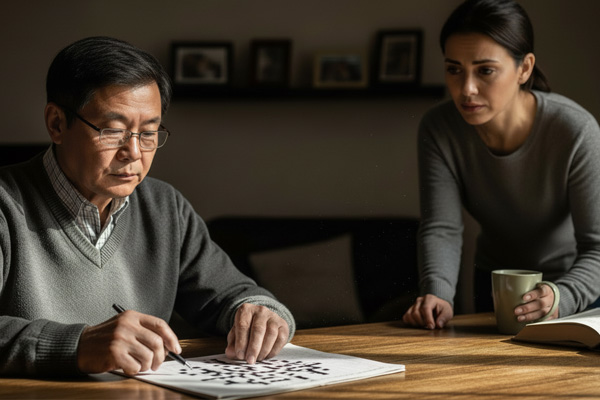
It is a by-product of methylation of the folate cycle. If that is elevated, then your risk for dementia, Alzheimer’s, stroke, and high blood pressure is up. It’s very rare to look at. A lot of people, when it comes to cardiovascular health, just look at cholesterol, LDL. It is demonized, and that is it. They totally miss so many other markers, and that is one of them. We have blood pressure. You would see it if you test your blood pressure, but dementia, Alzheimer’s, and stroke are the second death by a thousand cuts.
You do not really feel it until it is too late, and you can have all the money in the world and all the success you have or you want. At the end of the day, we saw it with the last president in the US. If you have a cognitive decline, usually the last person to know it, everyone else will notice it. Everyone else starts to notice that first before you do. Usually, when you do notice it, it is too late. It is very hard to reverse. It is better to prevent that. I am not saying that is the only thing there.
If you just focus on that, then it is going to be fine, but it can be an independent risk factor there. You do not fix that just with diet or exercise. You can walk, work out, you can eat less, you can sleep better, but that one day will require certain B vitamins and TMG, betaine in higher doses. You can get it from food, but usually not in all cases, but in many cases, there is supplementation required with it.
It’s such a great example, because personally, I would say if there is anything that you want to make sure you maintain, we are going to live longer. That is what science is giving us, the option. There is a lot of discrimination there too, not based on gender or race or things like that. It is financial discrimination, in my opinion. If you have money, there are ways to live longer because you are simply financially able, and others are not. That s***, of course. That is a different conversation.
If your brain health is not there, what is the point? It would be absolutely the opposite of what you would choose if you actually consciously could choose. Bruce Willis is a great example, very famous and successful, and a wealthy actor who has been in a cognitive decline for many years now. It is just sad, as you can imagine. Ronald Reagan, in his latter years, had Alzheimer’s. This is not anything new, and something we would love to do something about for sure. If somebody is tuning in, watching, and thinking, “How is my brain health actually? How am I doing?”
Accessing Advanced Blood Panels: Ordering & Doctor Trust
I sure like to get ahead of it if somehow or another there was a way to do that. Just walk us through, potentially, if somebody is thinking, “I want to find out how I am doing.” This homocysteine, that particular test can be added to a panel when you get blood work at a yearly physical, or is there something else? I just want to give people a more direct call to action here if they actually want to go ahead and take action on what you just said.
There are like online clinics, telemedicine clinics that you can order separately. Even via LabCorp, they have the option, or you can ask your doctor to order it. We have just found many times that most primary care physicians will not want to order all the tests for whatever reason, which I truly do not understand. If you are to pay out of pocket, there should be absolutely no negotiation there, tying it back to the book, but there should be no negotiation. It is like, “I am going to pay for it. I am not asking the insurance. I am going to pay out of pocket. Why would you not order it?”
If you want, and if it helps all your audience, we could put the panel that I have in the description. I do not make any money out of that panel. It is a clinic in California. They created that panel for me at a price that no other clinic was able to create. We have clients or people who just one-off consult, order that panel there. That does not come with any cons or anything, but at least you get the 97 markers there. Homocysteine is one. I would also throw in lipoprotein A. I touched on cholesterol before. Cholesterol is fatty. If you think about it, if you have some water in this glass jar, if you put olive oil or some fat with it, they do not really mix, and fat does not really swim through your blood.
It has to be packaged in a lipoprotein. That is like a tennis ball that is then swimming through your bloodstream. Those lipoproteins are different ones you can test. ApoB is one that mainly carries LDL cholesterol, but also VLDL. It is usually a life-threatening risk. Some cardiologists and clinics, if not most, will say that it is a greater predictor of cardiovascular risk. Usually gets tested more, but one that is overlooked is lipoprotein A. That is a genetic risk factor for cardiovascular risk. If that is elevated, especially if it is very high, the triple digits over 100, then some cardiologists will say that your risk for a heart attack can double. Of course, your lifestyle is still the biggest factor, but that is an independent one.
Again, walking, lifting, and eating better will not get the number down. They are working right now on a medication. It is going to come out this year or next year, which could potentially lower that, but that will be an independent risk factor. If you know that early on in your life. One, you will be much more locked in or dialed in with your lifestyle, which is a good thing. Number two, you can be preventative in terms of testing. Calcium scan, CT angiogram, Boston heart health. Meeting with a cardiologist early on to see did that independent risk factor built up some plaque in my arteries and has it been impacting something, or actually, no, I am living such a good lifestyle. It did not have an impact.
If you do not know it, then it can be very rough because usually when someone has a heart attack, and they have an okay lifestyle, I do not want to say great, but also not horrible, under 50, and they go to the hospital, and they test that, usually it is very high that number. It just puts you at a greater risk. Again, does not mean that if it is high, it is going to happen, but it is more likely to happen. That alone, I have seen when clients get the results, sometimes they freak out, but also you see their diet gets way better just by that.
No extra coaching or nothing changed, just the awareness of that marker, which has been truly fascinating. Some people say, “I would rather not know it.” No, actually, it is helpful when you know it, and you are aware of that, you take back much more control of your health, even though it is a marker. It cannot really be controlled. I would say that one there is important. If it is high and you have kids, it will be smart to test them as well, and your parents as well, if they are still alive.
Usually, for the kids, because then you would know, “We need to educate them better on their health and make sure they live a healthier lifestyle to minimize that risk.” There are many more, but I would say those are like two very critical markers that are very rarely tested, and everyone would benefit from looking at those. That does not mean other markers are not as valuable or more valuable, but if we look at the very uncommon, on the ground, so to speak, if we want to label it that way, I would say those two are very often overlooked.
The Awareness Factor: Knowing The “Why” Changes Everything
That is so important. I am very grateful to you as well that you are going to provide us with that information that we can put into the show notes for people to have that conversation with their doctor, or as you said, just order those panels themselves. It is a pay-out-of-pocket kind of thing. They are not a fortune in money. I’m done with a naturopathic doctor. She is actually a medical doctor as well. We ordered panels that, for my primary care physician, were not going to be ordered, etc. It was a few hundred dollars for sure out of pocket, but worth it.
Sorry to interrupt you. I just want to add something to what I think was the second question, where you said, “Do you think people do not know what to do or how to take care of their health?” I would say one of the things that people are missing is also the why. If I tell you to eat more chicken, or eat more broccoli, or eat more salmon, it is healthy, but they do not understand the why.
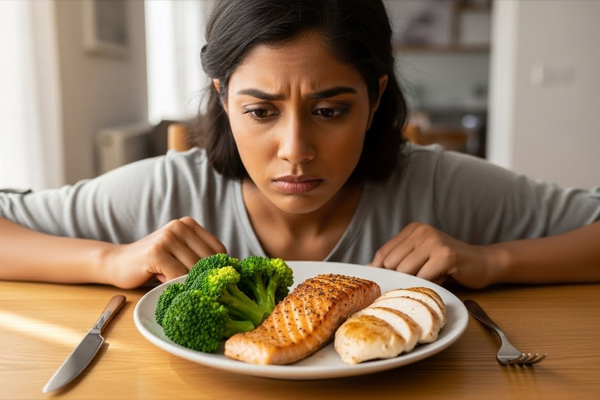
Once you know the why of your situation, it can be very powerful, just as with those two markers. For example, in my case, I was never a big fan of broccoli. I would have it sometimes, but I did some genetic testing, and the blood panel we have and based on my symptoms. I have not always, but depending on the geographical location and the environment, my asthma got worse or better or non-existent, and in different places where I lived or stayed at were, I had stronger symptoms.
I noticed that on the days that I had broccoli, it got better. I thought like, “That is interesting.” Especially broccoli sprouts, like broccolini, small one, small and long. Once I did the DNA test in labs, it was very clear that I have a much greater need for glutathione and other compounds that are found in broccoli. Of course, in other foods.
From that moment on, I cannot explain it to you, but it started to taste better, and I started to feel like I was fueling my body. This is what my body needs. I had a greater level of commitment to add that to my diet, even though I prefer other veggies and other fruits. It was definitely not the first choice. Now it is one of the top 3 to 5 choices in my diet that I have every week, multiple times, because I know I feel better. I have less smoke in my lungs, and I can breathe better. It calms any cough. It has just been fascinating. If people know, like, “This here is really helpful for me.” If you have a condition like that, it is going to get people much more buy-in.
The “Why” In Health: Fueling Your Body With Intention
I’m so glad you created the parenthetical statement there to the earlier question, because if you do not know why you should be having something other than someone’s telling you, “Should have that,” or “It is good for you. It is healthy.” It was like when we were kids. One of my parents or relatives had said, “You should eat that because it is good for you.” Whether it was like liver or broccoli, to use your example, it was not enough of a reason to get me to do it. In fact, I might not even do it because they told me. They told me to do it. It is rebellious and all that.
To understand the connection between the food that we are consuming and how we feel and how we think, and how we can therefore act, behave, and experience life. That is a fundamental connection that gives us power to choose. When we are given the choice, we will always choose to feel better than to feel worse. I do not think that is even a debatable thing. Everybody is that way. If you do not understand the connection, you understand if you do not understand why, as you said, why would you do it other than just because you are putting faith in someone else, or you are willing to say, “I do not do it on you.”
Just blindly hoping or whatever it might be. That is not a good enough reason, especially when sometimes to get foods like that, as broccoli, being one example. Of course, that is just an example. Maybe it would be more inconvenient. It could be more expensive. It could be that you cannot eat or just indiscriminately eat without putting some pre-thought into it or planning it. Does that make sense?
Yes, 100% does.
The Value Of Coaching: Beyond The Plan To Behavior Change
You do some coaching. Your organization helps people with this because these sorts of decisions and the thinking that precedes the decisions are habitual. As I think I may have said either while we were recording or before it, I think habitually people are just not their habits when it comes to this are not great. That is why, not initially, maybe not when they are 10 years old or 20 years old, even, but down the road, 30, 40, 50, 60, 70, 80, whenever it is, the results of those poor habits show up, and that is unfortunate.
It is something that could be changed if we just understood it better earlier on. Does your organization help people through coaching? What is your process? Other than, I know you will help to get those tests ordered, and then you will also interpret those tests and give people information about them? How does that kind of work?
Yes, that is a start. You bring up a good point because we have had such a great conversation so far on the blood work or testing in the data. As you touched on, that alone is not sufficient to create long-term behavior change, a shift in identity, potentially for some people if they are in a very bad spot. Most people may take action initially, but then get off track. The way we do it is we get two pieces of information. The blood work is one, but also an assessment of someone’s lifestyle, not it. If you think about a surgeon, he does not do surgery without an X-ray, without first knowing what is broken and what needs to be fixed.
Those two pieces of information are a necessity for us to create a customized plan. We put that together, lay it all out for people, and coach and walk them through it, setting up habits, routines. Of course, there is a plan. What to eat, when to eat, how much to eat, workout, sleep, lifestyle, that is all great. We also focus on the shift in perception, the shift in identity, because that is the biggest driver of behavior. Equally focusing on the habits on routines, and behaviors, and what needs to be in place in that regard to make a long-term shift. I have always found the biggest value for myself when I hire a coach, but also for people when they hire us, is not the plan.
I do not want to downplay the plan in any way, nor do I want to take accountability. I do not want to downplay that either. It is what I do here. I have found from start to finish, whether it is from someone who needs to make a big change with their health to get them their outcome here, or whether it is in business, leadership, organizations, whatever you want to call it, or take. There are about 100, 200, 300, maybe a thousand decisions that need to happen. Some are more important. Others are less important. Knowing which door to open and which door to not open and leave closed.
That is going to be the greatest value because I can give you, Adam, a plan with all instructions, and within the first week, you crush it, or you are happy, but you are going to get to a point where you hit a wall, or you have some symptoms. The question is, what should I do next? Should I reduce my training? Should I increase intensity? Should I add an extra set? Should I walk more? Should I walk less? Should I eat more? Should I eat less? Should I up my carb? There are so many variables and decisions. Should I take a higher dose of this supplement? Should I get a different supplement?
Is it the brand? Is it the dose? Why is it working? Why is it not working? There are so many things. I have always found that the biggest value where you have someone who has the experience and says, “Do this, do that, stay away from this, do this.” Telling you what door to open and also explaining why we should open that door, not the other one. I have always found that to be the greatest value. One of the coaches or mentors that I have worked with over the past twelve months, I do not know if you know him, Todd Herman, he has worked with Kobe Bryant, Nadal, and Ronaldo, and he has coached them on their mental performance.
One of the things that he said early on is, “You shouldn’t be doing this. It is not just what you should be doing. It is what you should not be doing.” He closed many doors for me. Do not focus on this. Do not do that. Do not do this. Focus on this. By closing those doors, you have more energy, more focus, more attention, and more resources on the things that matter. That is like the biggest value there. That decision-making process and skill.
It's not just what you should be doing; it's also what you shouldn't be doing.Share on X
Connecting Health To Peak Performance: The Olympic Mindset
I could not agree more. I am very much interested in athletics and more now than probably in the last twenty years, for reasons I want to get into. It is fascinating because in sports, it is easy to see the connection between how a person has approached their practice and what they are ultimately able to do in the field of play. That time is committed to understanding how to perform better, and the coaching that is an essential element of that has a clear ROI, and you see it.
It would not be odd for to see the swing coach, somebody that is helping golfer, for example, with the mental side of the game or even the physical mechanics of their swing to walk the course with one of their clients, literally while they are playing around a golf to be there to watch them, observe them, and ultimately to provide some insights nor to see a coach in the player’s box at the French Open or at any other major tennis tournament watching their player ready to provide guidance or taking notes to be able to debrief with that player afterward. Why should it be any different for us?
It is really just about how you view yourself, and also the economics of it. There are two pieces of it because sometimes I will say to an audience, I have the great privilege to be able to keynote on the topic of resiliency, and we can cover. It is very malleable. It says a lot of things we can cover there, including mental health and stress management, and other things that contribute to performance in the business space. I will sometimes say to an audience, “What if you were running an Olympic event today, or you had a race tomorrow in the Olympics, what would you be doing? What would you be thinking about today? What decisions would you be making?
Would you be drinking? Are you out having more brown liquor at 10:00 at night and not giving a lick about your sleep or about your hydration? Obviously, we all know the answer is that we would think about it quite differently. For folks, one of those first mindset shifts is to be thinking about yourself differently and the importance that you have to not just in your own life, but in all the lives that you are actually impacting, whether it is your family directly or it is the other people that you work alongside, and what that ripple effect is. That is very important.
When you heighten the level of focus and importance on that, almost like it was an Olympic event, you treat it differently. The second thing is you would not pass up the opportunity to be coached or given guidance or provided insight from someone who is an expert if you could afford it. Again, these two things that you are worth it, A, and B, that you are willing to invest in the resources to support you in being at your best. That is a decision that you have to make and one that also has economic consequences. If you do not have the money for it, I get it.
We all would get that. Yet people find the money for the things they want. God knows what a latte costs today. You could spend $7,000, $8,000 on something, and it is gone in a second. You can spend $200 on a meal, and it might not even be a great meal, or on drinks or whatever. Those are choices you make with your money. This is just a choice. With that, Mauro, I just want to say thank you so much for the conversation. We just really scratched the surface. I want to say that out loud. Perhaps we can schedule part two of this, and we can pick another topic that we can dive into.
What is great and I am just going to ask you one final question, but I want our audience to know that the show notes are going to contain a lot of information that you have referenced, including how it is that people can get in touch with you and be able to think about if they were going to put themselves in that category of I am really important, maybe a little more important than they are comfortable at actually feeling or owning.
They are also willing to think about getting an expert to look at them and provide insight, even to coach them. There will be information about how to do that with your group. Mauro, it is an open-ended statement at the end that I would like. I want you to share, if you could with our folks, something about your philosophy that if you were going to have this moment to wake somebody up for a second about why this is so important, you did not say why, and I did not ask you why this was so important in your life, why you decided to go into this field, but maybe it is something like that so we can understand why this was an inspiration to you and maybe that will move somebody to actually do something with what they just heard.
Legacy And Prevention: Mauro’s Personal Motivation
There are multiple whys for me. It is always contextual. I was working in banking and working my ass off and chasing wealth at the expense of my own health. If we stay on, maybe a little bit deeper in the why of our topic, with the blood markers that we brought up, or cognitive decline, my grandmother had Type 2 diabetes and Alzheimer’s. Perfect case and off to this conversation. Sometimes, not just sometimes, but many times, I wish that I had the knowledge that I had 15, 20 years ago. She is ten years this summer.
In August 2015, she passed away. I wish I had it like maybe in 2010. If not earlier, that is where there was a rapid decline, because I know with the right tests and just the right action steps, I am not saying I could have reversed it, because ultimately it is her will and her commitment that would have played a role. I believe I could have made a difference there. It is good to put it out there for everyone that you should not, especially if you have kids, like do not let them wish or hope that you had done something differently, but be the change you want to be in yourself that you want to see in them.
Mauro, thank you so much for going there and sharing that. I have some people in my life, too, that I wish were still here, that I can think in the same way that you just said that perhaps something that was avoidable or delayable or something. I think back to Dr. Casey Means, who wrote that book, Good Energy the beginning of the book, she talks about her mom and how she lost her mom at a young age. Her mom may have been 69 or something. She is a Stanford medical student. She is at the top of her class. She becomes a doctor and all that. She realizes pretty quickly on in part because of her mother’s illness and decline, that the traditional approach to medicine and to health and it was not going to do it for her.
It is a very relevant thing right now, not just cause she is a bestselling author and personality out there, but she is also being considered to be the Surgeon General for the United States. It is a big deal at this moment as well. I probably can tell from my statement here that I am in favor of that based on her book. She is she is got the right approach, or at least the right mindset, around this. Mauro, thank you so much again. I am so looking forward to seeing where your work in the world takes you.
For all of our audience, I hope they will contact and connect with you. Neither a case that this conversation has just perhaps opened up a window for people to just explore more. There are lots of ways to learn more. That is one of the great things about the technology shift that has occurred. It is just pretty possible to learn a great deal without going to medical school, I suppose, at least enough to keep the conversation alive and meaningful. Mauro, thanks again, and be well.
Thank you so much for having me on, Adam.
—
Final Takeaways On Health, Self-Care, And Community
I was just captivated and fascinated. I hope you guys were as well. Different conversation, a different conversation than we typically have on this show. I was very happy to have Mauro as a guest and to talk about something at a metabolic level, at a granular, a cellular level, such as our metabolic health and the blood work that is important in terms of our gaining an understanding and knowledge and awareness of what is going on inside, what is going on under the surface that we cannot see, but that we likely can feel and definitely will be impacted by sooner or later.
The book by Casey Means, Good Energy, was really impactful for me in the last six months. My son-in-law gave it to me, and I read it and could not put it down. It is really important that we have a better understanding of ourselves so that we can be there for more of the things that we love, people we love, and the work that we love. If we are not at our best, again, it would be like if we were signing up to be an Olympic athlete somehow, you go, “It could be in the Olympics.” Would you just be okay with how you perform and not prepare, not practice, not get coached, not really be focused on how you could optimize for that experience and for that opportunity?
The answer is, of course, no, that would not be the way you would approach it. You would be so intentional about it. Right down to the water you drank and how you hydrated your body, and what you ate and how you slept, and all these other things. Of course, it is such a big topic, we cannot dive into all of it at once, but we did cover something that I think was fundamentally important, and there will be information in the show notes to follow up that listening experience for you with some action if you want to take it.
As Mauro said, he was provided that information. There is no financial gain to him to do that unless, of course, you were to want to engage with his organization to get coaching or whatever it is that they offer. There is certainly no financial incentive for me to say that. I just can feel like we need to speak more openly about what we do not understand when it comes to our health and how we can support one another in gaining not just a greater understanding, but a greater acceptance of the level of importance that it has, that it plays in our lives, of course, but in the lives of so many other people that our lives impact.
It was a debate I had with my father-in-law, whom I miss regularly. I wish he were still around, as Morrow was sharing about his grandmother. I miss that. I miss my father-in-law as much. Our debate was always around whether being selfish, like taking care of yourself, was selfish and whether intentionally focusing on yourself was actually somehow putting other people second. That was the debate. My strong feelings to this day remain that being focused on your well-being is unselfish. It is what actually helps you to be there for other people and will create the longevity that is also something that the people in your life who love you, or who are learning from you, or whatever it might be that they are craving.
To deny them that because you are unwilling to put yourself first for whatever those reasons are, including old programming or just whatever, laziness, a lack of urgency, or funds, even economic speak, whatever the excuse may be, that is truly selfish. I won’t lecture. I will just say I did have those conversations with my father-in-law, and I failed in my attempts to move him in that way, but we did enjoy a lot of time together, and every moment of that I cherish.
Again, I hope this episode was impactful. I hope it was interesting. I hope you share it with other people who may just need to hear some of what it was that Mauro said. Please share with, friend, family member, colleague, or do that. If you have got comments, if you have got thoughts that you want to share with me, AdamMarkel.com/Podcast, you can leave a comment there, of course a question there. We just appreciate you. Appreciate you being part of the community and that you are supporting what we are up to because none of this works without you. Thank you again for all that, and I will just say ciao for now and be well.
Important Links
- Mauro Stara on LinkedIn
- Mauro Strata on Facebook
- Mauro Strata on Instagram
- Six Pack CEO
- Never Split The Difference
- Good Energy
About Mauro Stara

Mauro Stara, founder of Six Pack CEO, is a peak performance expert and trusted advisor to successful CEOs and business owners. Known as the last resort for those exhausted from mainstream approaches, Mauro specializes in resolving challenges where others have failed. By prioritizing advanced blood work testing and personalized coaching, he tackles the root cause of stagnation: hormones. With his guidance, clients achieve lifelong, sustainable transformations, reclaiming vitality and confidence amidst demanding schedules.
Build Momentum That Lasts
By combining practical frameworks with decades of experience, he transforms insight into systems that fuel growth, engagement, and long-term resilience.
Fresh Perspectives on Leadership & Performance







.png)
.png)
.png)