
.png)



Growing Into Yourself with Dr. Rick Hanson

Being at peace with yourself and everybody around you is possible if you know how to capitalize on the power of your brain. In this episode,
Dr. Rick Hanson, a psychologist, New York Times best-selling author and Senior Fellow of the Greater Good Science Center at UC Berkeley, talks about the power of the brain in acquiring knowledge and guiding us through our daily experiences. Dr. Hanson discusses the important and powerful intersection of brain science, clinical psychology, contemplative practice, contemplative wisdom and mindfulness practices. He also dives into how brain power
affects resilience, self-worth and compassion. Dr. Hanson offers advice on how you can change your brain for the better and walks us through his two-step process of growing into yourself. Get the newest Conscious PIVOT Podcast episodes delivered directly to you -
subscribe here.And, if you're enjoying the podcast, please give us a 5-star rating on iTunes!
For instructions click hereDOING THIS for 10 Seconds Can Change Your Life!
Click here to watch Adam’s Inspiring TEDx Talk!---
Watch the Episode Here
Listen to the Episode Here
Read the Show Notes Here
Growing Into Yourself with Dr. Rick Hanson
As I sit here, I'm filled with gratitude. I love the fact that I've got a guest that I will call simpatico. He’s somebody I've met. He's brand new in my world and you'll get to meet him. I was first introduced to that word simpatico, which is Italian, and I don't think there's a real clear definition of what it means. It's a kinship, I suppose, a feeling that you have something in common with somebody else and that feels great. When you meet people like that, the energy feels right and you know there's going to be a fun and interesting interaction. It’s from this old and evil law book. I'm throwing down now to my roots as an English major way back before I went to law school and stuff like that. Simpatico is the word to launch our episode. I've got a great guest. His name is Dr. Rick Hanson. He's a PhD,
a
psycholo
gist and
senior fellow of the
Greater Good Science Center
at UC
, Berkeley. He’s a
New York Times be
stselling author, which is
no joke. Having had a couple of books and hit so
me lists and things like that, t
hat is no joke to get on that list as well. His online foundations of well
-
being program help people to use positive neuro-plasticity to grow
their k
ey inner strengths like resilience, something that we've been talking a
lot about lately. It's the fact that
when
I'm hired more often these days to speak to corporations, it's on the t
opic of resilience. W
e'll have some conversation about that.
R
esilience, self-worth, compassion and anyone with a financial
need can do it for free.
I thi
nk it's terrific that
there's no barrier
of admission based on
money. Dr. Hanson has spent decades helping people turn everyday experiences into lasting happiness, love and inner peace, hard
-
wired into the brain.
W
e'd get into that as well.
W
elcome, Rick.
Mr. Adam, it’s a pleasure to be here. My wife, Randi and I, we’
ve
be
en
married for 30 years.
We
honeymooned in Jamaica and
there’s
something beautiful about being in certain pla
ces of the world in
areas of Asia and oft
en in the islands where you are Mr.
followed by your first name and it's
endearing.
W
hen I was
23, 24 years old,
I didn't grow up in that environment of Mr
. Adam, but I
've
come to love that. I
t's respectful and yet it's personal.
Y
our surname is a little more formal. Your first name is
more casual, but the Mr.
creates harmony between those two things
. What is not written in
this bio that in
cludes a lot of what I suspect is many years of work, determination and discipline?
What's not written in that bio that you would love for people
t
o
know about you?
I have a long-time rock-climbing background, wilderness, I have done a lot of intense things. I have done a lot of stuff in business and that background. Also growing up, I was pretty miserable and unhappy for a lot of reasons. That has led me to have an orientation to this topic area of growing inner resources, inner strengths that are hardheaded and clear-eyed about how life is challenging and tough. The cavalry is often not coming. Before we began this conversation, we were talking about our crazy political situation right now, which is alarming in a very visceral way to many people, you and me included clearly. Given that the cavalry doesn't seem to be coming given that traditional institutions are breaking down, given that for various reasons, there's a deadlock at the leadership level in this country, more and more clear we're on our own. What do you do? You've got to grow strengths inside. While I'm a longtime therapist and that can seem soft, wishy, airy-fairy and like a luxury, I think of it in a very tough-minded way that what we're about including what you're doing in your show is helping people grow strengths inside. I'd say that's the orientation or bring to this tough-minded, clear-eyed view of the difficulties of life and the importance of self-reliance. That informs how I look at this and what I've done in the last twenty years or so has been to engage the leading edge of neuroscience, the fantastic breakthroughs and developments in the last couple of decades and think about how to use that very geeky stuff, very cool stuff. How to use it practically to turbocharge a person's growth process as they go through their day in their life. It’s to super steep in their growth curve, their healing curve, their learning curve or development curve, in a way that makes people in charge of that process themselves from the inside out informed by modern neuroscience. How do you help the brain change for the better as much as realistically possible every day? I'd say that’s my specialty and I'm interested in it. I also have a longtime background in meditation. I got interested in meditating in 1974 which takes me back and it's been a while. For me, a lot of what I do is right at the center of three circles. If you think about it, the intersection of brain science, clinical psychology, contemplative practice, contemplative wisdom, mindfulness practice. You think of the center of those three circles where they intersect with each other. It’s a sweet spot for a lot of skillful means that we can use to help ourselves and to help every other people. Rick, r
epeat what th
ose three circles are. P
eople are going to be taking notes.
Our community is pretty avid on the side of
continued learning.
T
here's that little Venn area.
The intersection of the three circles. Circle number one, your body. What's going on in the body, the physical, biological body, especially the three-pound of tofu-like tissue inside the coconut between your ears, which has been described as the enchanted loom, continually weaving a tapestry of experience. It’s an awesome metaphor.

Do you recall who said that?
He’s a guy named Charles Sherrington, a neuroscientist. Second, I have a long-standing background in clinical psychology/human potential. Psychology is mainly Western. It’s the study of the mind. It’s deeply rooted in Freud, modern researchers in psychology, clinical psychology, that territory. That's the second circle. The third circle is what could be called contemplative practice around the world and all the great traditions: Buddhism, Christianity, Islam, the Shamanic indigenous cultures. Increasingly now, there’s a very secular approach to contemplative practice with the mindfulness movement in that territory. These people, especially those who are most developed, are sometimes described as the Olympic athletes of mental training. These are people with tens of thousands of hours of lifetime practice of sitting quietly and directly observing their mind with over time, tremendous concentration and a laser-like granularity of focus. They’re penetrating into what's happening in the mind on a timescale of multiple events per second. Those folks have worked hard and they have a lot of wisdom. That's the contemplative tradition. The one I know best is Buddhism, especially the original teachings of the Buddha. It's the most stripped-down. It's not religious. It's very psychological. It's very direct as an inquiry into your own immediate experience. That's the third circle. If you imagine the intersection then of brain science, psychology and contemplative practice, right at the center of those three circles is a lot of wonderful stuff. I call it applied neurodharma. W
hat's the shaded area?
It’s applied neurod
harma.
It's applied. T
hat's the key. That concept that knowledge is power is BS because
you can acquire all the knowledge you want in the world and if it's nothing but head knowledge, what good does it do for you?
The neurodharma, I'm fascinated about that but we’ll
put that aside
. T
here
are
a few things
I'm tracking as
loops I want to open and
perhaps,
we get to close them a little bit on the show.
O
ne is psychedelics a
nd another is nootropics
and another h
as to do with the ability to change. W
hen you talk about neuroplasticity
, we're not talking about neurorigidity. Neuro
rigidity to me would be the old expression that an old d
og can't learn new tricks.
T
here
are
lot
s
of people out th
ere who truly do believe that
. T
here's probably a fair amount of evidence to suggest that for most folks, when those grooves in the record, where are our programming from, whether it started with our first trauma of five years old or what we learned from our parents and our teachers growing up, that thos
e grooves are deep enough. F
or a lot of people, making a change, truly ch
anging something in their life
like their habits is
quite challenging.
I would challenge the notion only through my own experience and having worked with a lot of people that people can change,
but again, you're
much more the expert in this area than I am.
I do want to dive into that. I want to say tha
t I did an episode
about m
y experience in Costa Rica
where I
was brought down there
to share some information with some folks, which was great and
I
had a beautiful retreat experience fully paid for. It's one of the great things about being a public speaker
. T
here
are
some w
onderful things you get and the
places you get to see
and all that thing.
I was invited to
participate
in some ceremonies with
the shaman that facilitated ayahuasca
journeys, a plant medicine, and I did that for three consecuti
ve evenings.
I
've
also been
interested in the nootropics topic as well, taking some supplements in the past about that too.
W
here wou
ld you like to dive in those
categories?
Is
the
b
rain
capable of changing? I
s there some relationship to some of these ancient contemplative practices including the ceremonies that are often guided by plant medicine and the modern
-day psychedelic? M
aybe it's not even psychedelic, but this thing call
ed nootropics where people
are actively putting supplements into their body to increase the plasticity of their brain and maybe other
functions of the brain.
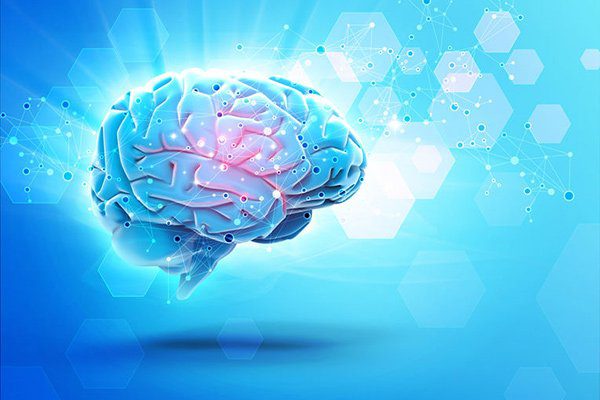
That's a great topic territory right off the top, Adam. I'm excited about these loops that you're opening up here. Let me start with the brain. Let us ground it here and then we can launch. The brain, right now people can imagine what's inside their head literally. It's about 200 billion cells ballpark and about half are neurons, half are support cells. A typical neuron is connected to several thousand other neurons. If you do the math, that means inside our head right now we have a network with several hundred trillion little microprocessors. Each one of the connections, the synapses between neurons is like a little microprocessor and it's handling information. There are other mechanisms that represent and process information as well. You can immediately get what an extraordinary information processing device we have inside our head, which is networked into the nervous system that runs throughout the body, which is then networked into other information processing systems like the immune system and other kinds of things that are working together. Talking only about the brain, a typical neuron is firing 5 to 50 times a second. Millions, even billions of neurons are firing synchronously with each other many times a second, which produces the brainwaves that EEGs detect. This organ is only about 2% to 3% of the body weight, but it uses 20% to 25% of the metabolic supplies: the blood, oxygen, sugars and so forth. It's an incredibly metabolically expensive organ and a vulnerable one. Why would we evolve it? It's to enable the mind, the nervous system, especially its headquarters is the brain. It’s the basis for our experience moment after moment, after moment. When I use the word mind, I don't mean it in some esoteric sense. It’s literally hearing, seeing, tasting, thinking, remembering, planning, wanting, loving, hating, enjoying and suffering. All of that moment to moment is being made by physical processes. There may also be supernatural and transcendental factors in work. I'm personally a super transcendentalist. I think there's more going on than we know about, but minimally, most if not entirely everything that's the basis for our experiences moment by moment is happening between our ears. That's the final pathway of the causes that make each moment of experience. That's the way to get what's going on right now with this conversation. The brain is making our experience moment by moment. The question then becomes in terms of applied. We don’t care about how to nudge that brain-based process in a good direction, how to nudge it away from addiction and nudge it away from traumatic memories and limitations. Nudge it away from habit patterns of getting into wrangles with other people or ruminating about resentments or self-criticism but moving in a positive direction, including the upper reaches of human potential, which interests me enormously. Both the more conventional range of self-actualization and then even going all the way as a number of people clearly have in this life, all the way to full awakening. How do we do that? How do we change the brain for the better? That's your question here. There are literally dozens of little tiny mechanisms inside the brain that produce the physical changes that are the basis for experiential changes, mental changes. For example, there's a classic saying, “Neurons that fire together, wire together.” New connections form. That's one mechanism. Another mechanism is existing connections get energized or de-energized. That's another mechanism of change. Ebbs and flows of neurotransmitters like dopamine, serotonin, that's another mechanism of change. There are many mechanisms of what's called experience-dependent neuroplasticity. The takeaway is that the process of self-directed neuroplasticity, the process of self-directed brain change, helping yourself change for the better, growing the good inside yourself, including very heartfelt things like love or compassion or self-compassion. Growing that inside yourself is a very simple two-step process, but you must do both steps. The first step is you must experience what you want to grow. Either through you're already feeling it because you're maybe with a cool guy like Adam Markel and he's a cool guy and you feel good around him or you look out a window and you naturally see some trees or flowers as I'm doing right now. Maybe you deliberately create an experience through remembering something that makes you feel happy or bringing to mind something you're grateful for. Maybe you’re taking LSD or drinking a cup of coffee or having a bagel with cream cheese. Whatever that might be, you're having an experience and you must experience what you want to grow. The second step is critically important and one that people forget all the time, and that's the dirty little secret in psychotherapy, human potential, mindfulness training, human resources training. It’s that you must turn that experience into a lasting physical change in your brain. That's broadly the basis of learning: healing, developing and transforming. If there's no physical change in your brain, by definition, there's no lasting value. It might have been a momentarily cool trip. I've done psychedelics. It could be a momentarily powerful therapy appointment or walking the dog. You realize, “From now on, I can't be such a dickhead,” or something like that and it's nice, but then an hour later, a minute later, a day later, you're the same old, same old. Nothing has changed. How do we do that second step? How do we make the experiences we're having in the moment leave lasting physical changes behind in neural structure and function? That's the practical question and it's one I've been extremely engaged with. How do we do that second step? How do we promote it in other people? Especially, how can we do it ourselves in the way we relate to and engage our experiences? I can talk about some of the key hows to that but maybe I'll pause here emphasizing the second step. L
et's use an analogy. I
think it's a good one for people.
I
'm guessing e
verybody's tracking this, but I like
v
isual examples because I learn and I also end
up sharing informati
on through either story. W
hen we work with speake
rs, more often than not we say, “Y
ou've
got a great message. It’s terrific, but
don't teach the way most people teach because
then you put us to sleep. I
f you put us to sleep, you've missed the o
pportunity to get in there,
to get inside
so
that any of that change can occur becau
se we're distracted or you were predictable so we turned off and now we get bored.” This analogy
is a good one.
Imagine
that you're at your computer and you hit print on a particular document
. That comes out the printer, you pick it up and
you realize there's a typo on it.
Y
ou take a pen, a
S
harpie or whatever it is. You c
ross out the thin
g that's wrong and you write in the correction. You then
go back
to your computer and say, “I have corrected it now.” Y
ou go ahead and hit the print key again and low and
behold, what
comes out of the printer is the same error. This thing that you corrected is still an error even though you went ahead and erased it or scratched it out or whatever it was becaus
e you didn't go to the program. You made
a c
hange to it, like you said, maybe
you had a great experience at a seminar, you read a great book or something.

It's the equivalent on some level of seeing tha
t printout and then saying, “
I'm going to make this change.
I've decided I'm finally
going to
forgive somebody,
my father, my mother was someone who hurt me a long time and I'm
going to
forgive them.” It's like scratching out the part that says, “I can't forgive them,” and you write in i
nstead
,
“I do forgive them
.
”
Y
ou go back to the machine and h
it the print key a week later and it still prints out,
“
I can't forgive them
,”
because you haven't made a change to the programming, to the code. It's on the inside. Is that a fair example of what you described as the second piece of turning
the
experience into a lasting physical change in the brain?
Yeah, that's a great analogy. Maybe I can make it concrete here. We all learn. The notion that old dogs can learn new tricks, we're all learning. We're all changing continually over the lifetime. My dad who passed away before he was 97 was still learning new interesting things, including how to be calmer and happier, as well as other things toward the end of his life. We do learn. If you want to help yourself change, first of all, imagine that you begin with the experience, whatever you want to develop inside. Maybe you want to have more sense of worth. Maybe you want to feel that forgiveness, that letting go. Maybe you want to have a cosmic consciousness experience, a sense of vast openness. It’s a territory I'm very interested in. Let's say that's true. You start with that experience. A lot of research shows that if you want to help it sink in, if you want to help yourself change for the better, there are multiple things you can do, but three stand out for me. Number one, stay with the experience for a breath or longer. It's haunting how often we work hard to have experiences and then we race on to the next thing before the current thing can sink in. We're always changing. Stay with it a breath or longer, and if you tried to do that, repress less than ten seconds and do that. You watch your mind jumping onto the next thing, particularly the ways in which our minds these days are trained to be stimulation-hungry and always seek the next little thrill, the next step, so stay with it. That itself will increase the wiring of that experience into your body. Any single time you do this will be small and incremental, but drop by drop, you'll be filling up the cup. Stay
with the experience, that will be one.
The second, feel it in your body. Take it out of the head, bring it out of the idea, feel it in your body. The more you feel it in your body, the more it's going to sink in. What does it feel like in your body to be forgiving? What does it feel like to feel determined and gritty in the face of people pushing you around? What does it feel like to be patient with your kids who are aggravating? The third interestingly is focus on what feels good about it. What's rewarding about it? People trivialize positive emotions or positive experiences like some California yoga camp BS. The positivity of an experience is usually an indicator that it's valuable. There are some experiences that are enjoyable, like getting too drunk or too angry in the moment that we pay a price for later if not at the time, but most enjoyable experiences are good for us. We've evolved biologically reward indicators that say, “It's valuable to feel forgiving. It's valuable to let go. It's valuable to let go of stress, shed stress. That's good for you. It's valuable to feel strong. It’s valuable to feel like you're worthy.” These are indicators. The third thing here is if you focus on what feels rewarding about the experience, what feels good about it, technically that increases activity of two neurotransmitters, dopamine and norepinephrine in your brain. When their activity increases, that increases the wiring of the experience into your own nervous system. You don't need to do all three of these, any one of them as good. The more you do, the better. Half a dozen times a day, slow down to taking the good. Summarizing, stay with the
experience. I think the channel-
changing tendency or habit that many of us have developed over time and this constant nee
d for stimulation is important. T
he idea of tak
ing
a few breaths and stay with the experience, whatever that is, feel it
in your body. It’s t
he embodiment of it.
My wife often says, “I feel something a
nd
I sense it.”
She includes a place in her body where she senses it.
“I'm feeling happy, I'm feeling sad,
I'm feeling tense or nervous
,” or whatever it might be, “and I sense it in my lower back, my neck
or my heart
space or something like that.
”
It’s the
embodiment piece being number two and third, focusing on what feels good about it.
They produce
the chemical reaction of good feeling inside that produces more of the
same
.
I
t becomes a bit
of a snowball effect. I don't know if this is accurate, but you're creating a
new neuropathway or at least
another groove to
something that's more positive-
oriented. I'm
going to
say this
but you
be the one to push
back
if this is inaccurate, that
whatever it's been called, the reptilian brain, the ancient brain, the old brain, that part of us that is about keeping us
safe from the time when
physical safety was a
major concern of the day. T
hat's no longer th
e major concern of the day, but
there's still this battle goin
g on inside of us between
that fear response and seeing the glass is
half empty
.
T
he
way you can l
ook at things
in a negative way or at
least in a way that's saying, “H
ere's what
could go wrong and this is
what could happen if
,” type of thing. T
here's t
hat contrast and maybe even
a tug of war between that and the part of
us that wants to be content,
happy and peaceful.
Is that accurate?
This is an interesting topic. It's true that the brain evolved like building a house from the bottom up in three floors, you got the reptilian brainstem, mammalian subcortex and the primate human neocortex over the 600-million-year evolution of the nervous system. It is true. Let's say something a little complicated. I've done a lot of rock climbing. I've been in situations where I'm a thousand feet off the ground. I'm holding on to things the width of a pencil. The wind is whistling. My safety needs are being challenged while I'm having the time of my life. I know what I'm doing. I've got a rope on. I trust my partner. I'm resourced enough to meet my need for safety so that I'm not freaking. Just because there's a challenge to safety doesn't necessarily mean that we need to get all stressed, angry, frightened and freaky about it. It’s the same thing. We can pursue satisfaction. We can have goals, we can be ambitious, but we don't need to be driven or addicted to it. We can still be very purposeful, but we don't need to be a jerk to ourselves or others as we pursue our ambitions. That's our second great need for satisfaction, broadly defined. We have safety and satisfaction and then we have a connection. I'm talking about a model that's deep in the psychology of three major needs. They overlap a little with Maslow, but the basic model is safety, satisfaction, connection, managed by avoiding, approaching and attaching. I'm pulling together a pretty commonly accepted material in psychology and biology about the needs of any animal in these three major groups. The way a lizard makes its needs for connection, which is to say sex, I watched a couple of fish in my pond trying to have sex with each other and it's pretty primitive. It’s not as sophisticated as a bunch of high school kids getting prepped for a dance or something. There’s a point there too, because people often say, “The lizard brain is bad. The modern human brain is good.” The modern neocortex, which is very dialed in for many relationships can be crazy. Think about prejudice, discrimination, ethnic cleansing, about bitter rivalries, families blown apart after a parent dies. Just because it has to do with our more recent primate and human desires for connection doesn't necessarily mean it's wholesome. My point is we have three needs, safety, satisfaction, connection, loosely related to the three levels of the brain. We then have two settings for meeting those needs. I call it the red zone and the green zone. In the red zone, we're in fight, flight, freeze, flipped out addiction asshole. That's one way to meet your needs and we see that in the White House, if I can say that directly. We see one way to meet needs, but it's not a healthy way and it's suitable for a short-term burst of stress. You've got to run away from the saber tooth tiger. You’ve got to fight that aggressive Alpha male off of you back in the day. Can we call that the
root of that fear? Is that without overlapping?
Fear to me goes to safety, but it could be frustration. Maybe you have an important goal and you're not afraid, but you're frustrated and you're being opposed in accomplishing that thing. You have someone getting in your way. Maybe you're a woman in a corporation who's never going to get hired to the next level and it's frustrating. Maybe you're in relationship and you feel hurt by somebody or you're lonely or you grew up with a lot of insecure attachment and you cling to other people may be in ways that are not very healthy for you or for them. Fear is not in the mix there, but you're still in the red zone, you're still messed up about it. For me, it's liberating to think of these three needs as distinct from each other. Just because needs are running doesn't mean we need to move into what in Buddhism would be the second noble truth of craving. We don't need to move into craving and drivenness, which has three major forms. In terms of safety, craving shows up as fighting what's unpleasant. In terms of satisfaction, craving shows up as addiction to what's pleasant or drivenness for it or possessiveness about it. In terms of connection, craving shows up there as resentment, grievance or shame. That's the red zone and that's part of life. Once in a while, it's useful but most of the time, it's full of suffering and harm. The question then becomes, how do we meet our needs? How do we stay safe? How do we keep those people from harming us and those we love? In terms of satisfaction, how do we succeed in our careers? How do we keep going? How do we stay motivated when the going gets tough without stressing about it? Similarly, how do we deal with our relationships? How do we go on Match.com or OkCupid without freaking out about it? How do we work through issues with other people without becoming hateful? How do we track the distinction between being strong, firm and fiery without having ill will toward other people? How do we stay in the green zone? In other words, in terms of our meeting needs and the key distinction between the red zone and the green zone, which makes all the difference in the world. There's no escaping or needs. There's no escaping the reptilian brainstem and the rest of the brain structures. The only question is how do we do that? Describe the green zone. I don't know that I tracked it sufficiently. I got a sense of what the red zone looks like. What does the green zone look like? The green zone means you're pursuing your needs. You're staying safe, you're satisfied, you're connected while maintaining a sense of resilient well-being inside yourself. That's the green zone. You do it a lot. Here you and I are, we're dealing with things as we flow here. We're accomplishing tasks. We're managing challenges. We're not just sitting on a hammock with ivy chocolate in someone brushing our hair. That's easy. How do you stay in the green zone when you're challenged? That's the crux. The answer to that question to me is you grow strengths inside. You grow strengths inside that give you resources. In my example of rock climbing, I was resourced sufficiently. It’s the same thing in business. You can pursue goals and you can deal with obstructions, but you feel resourced. You don't tip into becoming a jerk about it. It’s the same thing with relationships. You can stay centered in a place of this compassionate and also assertive, not letting people push you around but not going to war with them.

H
is name i
s Mark Gober where he talks about th
e origin of consciousness. Obviously
,
materialism ha
s been the way of the world for a long time. That consciousness emanates from inside of us. His proposition, through research and other people's work that has for the most part been marginalized, is that consciousness eman
ates from outside of the brain. T
here
are
all kinds of spiritual implications and many others. I'm going to put you on the hot seat and ask you, what's y
our theory there? W
hat's your belief system based on sci
ence and based on common sense?
For me, it's respectful as well as scientific to start with simple examples or cases, especially when we're grappling with something as profound and puzzling as consciousness. I start with the squirrels in my backyard. Is this squirrel having experiences? Is your cat or dog having experiences? I think we would say, “Yes, a squirrel is seeing, is hearing, is smelling. A squirrel is having simple emotions.” I've watched some squirrels play with each other. I've also watched them be deeply frustrated trying to get seeds out of a bird feeder and being unable to do that. They're having experiences. The word consciousness for me is a tricky word because it sounds abstract. I take it down to experiences. What's the basis of the experiences of seeing, hearing or wanting that a squirrel is having that are very similar to seemingly the experiences that we're having? The basis for the experiences that we're having of seeing, hearing, remembering, wanting, even fairly subtle spiritual experiences in meditation, the basis for that seems like a necessary basis and perhaps even a sufficient basis.

f the tree falls in the
forest and no one sees it, did the tree fall in the forest? If
the t
urtle is having the experience but is not yet aware or conscious of having an experience, is the turtle
still havi
ng an experience or not?
It's hearing, it’s seeing, it's awake or asleep. All animals including fruit flies have to go to sleep. They have the equivalent of sleep. My point is that it seems clear to me that a nervous system is necessary for experiences including the field of awareness through which experiences pass. The question is, “Is it sufficient?” That's the key spiritual question. Personally, I don't know and my own view as a transcendentalist is that consciousness is necessarily woven into the fabric of reality for quantum potentiality to congeal into actuality continually at the front edge of now everywhere. That's a lot packed into that sentence. That's my personal view. As to whether that consciousness that's intrinsically inherent in the fabric of physical reality is necessary for the consciousness of a lizard, a mouse, a monkey or a squirrel, I don't know. In a deep sense of consciousness is necessary for material reality to occur, in that sense, it is necessary for hearing, seeing, tasting, touching, but, I'm not sure it's necessary. On the other hand, I think it's also true that there could be consciousness woven in transcendental consciousness, woven into the fabric of reality, while simultaneously it's not necessary for the experiences of a squirrel maybe making that distinction. I also think it's possible that someone, whether it's a squirrel or certainly a human being, can use their natural mental processes that are not themselves caused by the transcendental. We can use our own natural processes of intuition and imagination and opening to begin to have intimations or a sense of infinite transcendental consciousness. I think that's all quite possible. I find for me it's useful to track these distinctions because when people blur them together, I've been in the new age spiritual world since the early 1970s. It's a long time and I've seen a lot of BS, a lot of confusion. I've seen a lot of dogmatic atheism, I've seen a lot of sloppy, muddy thinking from people who are wishful and hopeful. It also clouds the issues. You don't see that in the great teachers and the great traditions. There's a clarity there and they're tracking these differences. For me, it's not just semantics or something academic to track these differences. It's respectful to track these distinctions. It is respectful for sure. I've been saying
something a lot lately that I r
ead or heard at
some point in the past.
Socrates said all learning is remembering.
I don't know that there's any original tho
ught anyway, but
I don't know who to attribute this
,
there's no
attribution for this quote, “
I'm open to everyt
hing and attached to nothing.” It’s s
omething philosophically that's been
important for me a lot lately because attachment is
a form of this
suffering. We talked to
that red zone as you were describing.
A
lot of that is part of attachment and openness.
T
hat's where the consciousness conversation comes from me is tha
t
if I'm to u
nderstand or if I'm to believe
that consciousness ema
nates from outside the brain,
it's almost like I'm a receiver.
It’s m
uch the way radio waves and signals and all this other stuff's floating through the
ether.
E
verything's floating through the
ether space at the moment. I
f I go in my car and I tune, the old tuning station or whatever, I can pick up one of those stations and listen to whatever style of music or talk rad
io or any of those things. O
therwise without that devi
ce, I can't tune into it
.
With it, I can. T
he br
ain is a way for us to tune in
, but yet it's still happening regardless of wh
ether we tune in or don’t. T
o me,
it’s
to be open to what's possible to learn
,
explore
,
understand
and experience. If we're willing to do
a little finer tuning, maybe we can all find more of what it is that we're here to learn I suppose.
You
t
alked about these three steps. On
the resi
lience side, intervening
the world, the mind
. T
he third, was it the body?
I don't know that I
tracked
exactly what the third one was.
I'm super practical. I'm a methods guy and it's by nature as well. It's like a scruffy cockroach. I say my wife's a butterfly and I'm a cockroach. I think, “What can we do?” Sometimes your mind is gridlocked, but at least you can go for a walk with your body, drink some water, have a cup of coffee, have a beer or something. Shift your body and then shift your mind. Take a nap. I'm looking around in all those areas, world, body, mind, and that said for the mind, I wanted to mention three key strengths for resilience that track these three needs and the inner lizard, mouse and monkey of the three levels of the brain. The first strength is the strength of peacefulness. It’s being calm in the core of your being, even though around you, you're threatened. I think that people who maintain that sense of inner peace in a refugee camp or a war zone or working as inner-city police officers who are like peaceful warriors, in their core, they’re peaceful. Even as they're struggling physically with somebody, they're in their core of inner peace. That's something we can develop over time, that core of inner peace, also contentment. That's the second strength that goes to our need for satisfaction. You feel authentically that there's an enoughness already in this life. You'd love to have more, but you feel, “This life already has been incredible. I've already had so much pleasure. It's amazing to be alive, to live at this time. There’s access to music, to food, to information, podcasts.” It’s contentment, realizing that just because you feel peaceful doesn't stop you from pushing against threats and speaking truth to power. Just because you feel content doesn't mean you become lazy or complacent. The last strength is the strength of love. Being able to develop inside yourself a fundamental core of compassion and kindness that omits none as the Buddha put it 2,500 years ago, which also recognizes that some people are bad people and they're going to keep coming at you like the Terminator in the movie. You've got to do things about that. Maybe you need to take up arms against them eventually, but in the core of your being, you're not poisoned by hatred. We're very vulnerable social mammals. Primates are incredibly vulnerable to grievance and vengeance. Justi
fied
grievance.
You see that manipulated historically, endlessly by authoritarian demagogues. You see it now, it’s easily manipulated. It’s us against them. It's important not to let that poison you. Those are the three strengths I wanted to mention. I'm anticipating
how a lot of our community may respond to this particular conversation as being a very small part of a much bi
gger trajectory that's possible. Perhaps we'll have a part two
for this. I think that
woul
d be terrific. We don't have to short change any of the places that we could go with this. I'd love to ask you about your rituals
at
this point
.
My office
has a beau
tiful carpet, like a rug. Our black Lab who's thirteen
y
ears old, his name is Willy. He lost his best buddy, Duncan, our Golden who
was
twelve years old. He
left this physical wor
ld to go off into eternity. I know W
illy has been missing his presence and showing signs of both
confusion, depression, a lot of the same things that human being experiences
gr
ief and grieving.
He’s having experiences. A
t the moment, one of the experiences he's having
is
his snoring
. He’s
asleep prac
tically at my feet and snoring. W
hat's something that you do on a ritual bas
is that helps you to
be more resourced?
I think your question is fantastic, what are those regular things? There are many. I'll headline a couple. One is when I'm first waking up in the morning, I reset myself. A key piece of that is to restate for myself my purpose in life, which has a feeling in it, not just the words. I restate that for myself and I feel it and I recenter there. I'll also often recenter in peace, contentment and love, the essence of the green zone where I go, “I'm not at war with anyone. Peace, contentment, I have a lot of things I’ve got to do, but deep down I feel like there's enough already and love. I might get irritated. I'm not enlightened yet, but in my core, I'm committed to not giving people cause to fear me and to approach them with what a teacher of mine described as a blessing disposition, leaning in toward others.” Peace, contentment, love that morning ritual before I get out of bed takes a minute or two, usually less. I reset in part because with practice, this goes back to where we talked about that two-stage process of growth. As we turn states to traits, we acquire traits like a trait of peacefulness, contentment, and lovingness that then becomes easier to activate as a state, which then gives us a chance to reinforce it as a trait in a nice positive cycle. With practice, I've been working at this for a while. I can access those at will pretty readily. That's the key ritual I think. I think the quality of our lives equals the quality of our rituals, the things tha
t we do on a ritual basis. By that, it’
s
not a religious
word for me
, it’s more like a conscious habit, the habitual things. You may say, “
I brush my teeth the sam
e way habitually. T
here's no consciousness involved
in the way I brush my teeth unless I change my hand. I
'll
do it with the other hand, t
hen it's different.
”
Putting
conscio
usness, an intention
behind somethin
g new that you're doing is how I define a ritual. W
h
en you're thinking in that way
about why you're doing what you're doing and if there's a purpose to it, there's a
deeper meaning to it. Perhaps a
t least anecdotally only,
be
cause
I haven't done the research, there’s
mor
e of a chance that it turns
a state, something that's temporary into a trait.
It’s s
omething that has some per
manence and lasting value.
There's a classic teaching, your mind takes its shape from what it rests upon. For better or worse, we rest our minds on resentments and self-criticism or we rest our mind on let's say peace, contentment and love. That's what we take our shape from over time and based on modern science, the brain literally physically in lots of lots of microscopic ways takes its shape from what our minds repeatedly rest upon.
As
par
t of a personal code of conduct,
I'm going to share
my waking ritual as we wind down part one of a future two-
part
series, at least a conversation with Dr. Rick Hanson. There are f
o
ur things for me
:
don't hurr
y, don't worry, don't condemn and don't resent
. These have been part of my personal code.
I don't say that I live that way e
very day or have for the last
years sinc
e that got developed, but don't hurry, don't worry, don't condemn, don’t resent. For me, i
t's part of that what you s
ay, staying in the green zone. It’s a w
ay to stay in the
green zone and
the most significant way for me to stay in the
green zone was the topic of a TED Talk I gave
.
It was published and it's a ten-
second practice
be
cause I think that the things we're talking about, the essence of them is not simplistic but simple mea
ning that they're usable. W
e can a
pply them, applied neurod
harma, we're going to apply somethi
ng. It can't be complicated,
otherwise most of us can't do it or
won't be able to put it to use. H
ere's the simple ten
-
second practice.
F
irst
,
I would love it if you'll engage with me on this one.
My question to you
is
,
did you wake up
today
?
Yes. I sometimes will ask that
question to audiences, varying
groups of people and there
wi
ll be
laughter because I raised my hand, “H
ow many of you woke up
today?” H
ands will go up and then
I
'll
look and
I
'll
ask the
question, “H
ow many of you
are
still
in the process?” T
he other hands will go up because n
ot everybody is. It's
a question that confronts people as well because we're not always awake or at
least we don't feel awake. I
t's an int
eresting thing. My question to you will be, “W
as that guaranteed last night when you went to sleep?
”
No. E
verybody has that same answer. Nobody
had a guarantee they'd wake up tomorrow. T
his is both my hope and my prayer for everybody
and for all of your families, for you Rick, for myself and the people I am involved with,
that we all get
to wake up again tomorrow
physically, emotionally, mentally, spiritual
ly however you look at it. W
e are a little bit more awake and aw
are and conscious tomorrow. In that moment
t
hat we all will get to have, we take ten seconds. It can be from the bed. Y
ou don't have to even put your fee
t on the floor, but
if
you want to
wait
un
til your fe
et hit the floor
, t
hat's fine
.
At
that moment that you're taking the first aware of breath, that first cons
cious breath of the new day,
realize there are people all over this planet who will be taking their v
ery last breath in that moment. R
egardless of the circumstances of our lives, which are varying and sometimes difficult and sometimes other things, that we can feel gratitude and appreciation
at
that moment
for our lives. W
hatever
it feels like in the moment, be awake. Say these words
if
you feel like saying them. Declare them out loud. You can say these words,
“
I love my life. I love my life.
” Do you love your l
ife
,
Rick?
I love living. I
n love with living for sure.
T
hat's it. It's a simple practice and like a lot of things that we do repe
titively over time, it creates
a new way of being
, a new way of feelings.
Rick, thank you
so
much. I feel
grateful that we got to spend this time together.
That's a fantastic practice, Adam, about remembrance that you've woken. Many people are taking their last breath even as we take this one right now. Thank you. I
t's simple. I l
ike things that are simple
and certainly
,
it's difficult to be
in any of those red
-
zone states. I
want to use your language. The
red zone
is tough to maintain at the same time that you're in
the green zone
. Gratitude is a green zone feeling.
T
hose two things are
mutually exclusive.
I can wake up in the morning and knowing that
we're in an inflection point in our world
in
many ways. There’s
all this division
. There’s
all this fighting,
there’s
all this issue about how to solve seemingly impossible or
intractable problems. These are tough things and to wake with them. We
pick up our phone and immediately start to consume a lo
t of these challenges and the rhetoric around them. It’s tough, but
I think with as a way to overrid
e that and we get to choose
. That's our fundamental freedom.
It doesn't matter where you live under what regime. We all maintain this one free, true freedom and that
is the choice to decide how we
frame these things, how we think about them.
Rick, thank you
so much again. I appreciate your time
.
For the audience,
i
f
you've lov
ed this, we love the feedback. P
lease let us know
at
AdamMarkel.com/podcasts and leave your comment. We'l
l respond to it. I
f you have other feedback,
we love that too. F
eedbac
k is like oxygen for us. T
he
good, the
bad, the ugly,
it
doesn't matter. It's all valuable.
Y
ou can leave a review on
iTunes. You can join us at
Start My Pivot
comm
unity on Facebook as well. S
tay tuned. We might have a part two of this, which would be
pretty stellar. Have a beautiful
, bless
ed
,
peaceful and loving day.
We'll see
you soon. Ciao
for now.
Important Links:
An End To Upside Down Thinking
iTunes – The Conscious PIVOT Podcast
Start My Pivot – Facebook group
About Dr. Rick Hanson

Rick Hanson, Ph.D., is a psychologist, Senior Fellow of the Greater Good Science Center at UC Berkeley, and New York Times best-selling author. His books are available in 28 languages and include Resilient, Hardwiring Happiness, Buddha’s Brain, Just One Thing, and Mother Nurture. A summa cum laude graduate of UCLA and founder of the Wellspring Institute for Neuroscience and Contemplative Wisdom, he’s been an invited speaker at Oxford, Stanford, Harvard, and other major universities, and taught in meditation centers worldwide. In 2016 he gave a keynote address at the annual meeting of the American Psychological Association. His work has been featured on the BBC, CBS, NPR, Radio New Zealand and other major media. His free offerings include the Just One Thing newsletter (over 120,000 subscribers), Buddha’s Brain Facebook (over 650,000 likes), and Being Well podcast. His online Foundations of Well-Being program helps people use positive neuroplasticity to grow key inner strengths like resilience, self-worth, and compassion, and anyone with financial need can do it for free. Dr. Hanson has spent decades helping people turn everyday experiences into lasting happiness, love, and inner peace, hardwired into the brain. He enjoys wilderness, taking a break from emails, and time with his wife and two adult children.
Build Momentum That Lasts
By combining practical frameworks with decades of experience, he transforms insight into systems that fuel growth, engagement, and long-term resilience.
Fresh Perspectives on Leadership & Performance












.png)
.png)
.png)