Culture, Connection, and Resilience with Gail Davis

Rapid technological disruption requires more than standard adaptability; it demands genuine Empathetic Leadership that tech tools can't replace. Adam Markel sits down with Gail Davis, Founder and President of GDA Speakers and former corporate event planner, to break down what keeps businesses standing through seismic industry shifts. Gail reveals how 28 years of building a premier speakers bureau taught her that radical clarity and tough choices are the kindest acts an executive can make. Together, they tackle the modern AI dilemma, illustrating why relying solely on automated outputs drains your core competency and dilutes personal brand equity. You'll discover why direct human connection remains the winning edge when navigating uncertain markets and rapid workplace turnover. Tune in to learn how reframing major disruptions turns unexpected industry setbacks into your greatest organizational asset.
------
Show Notes:
02:03 - The Hidden Cost of Misplaced Loyalty
07:33 - Ditching Polite Avoidance for Radical Clarity
10:12 - Unstated Expectations Breed Workplace Frustration
13:25 - Moving from Transactional Order-Taking to True Partnership
27:57 - Why Delegating Core Competencies to Automation Fails
37:01 - Deploying Empathy as an Unbeatable Advantage
39:21 - Reframing Disruption into Strategic Growth
Get the newest Change Proof Podcast episode delivered directly to you, subscribe here. And, if you're enjoying the podcast, please give us a 5-star rating on iTunes. For instructions, click here.
How do we build workplaces where people thrive? It starts with creating a culture of trust, connection, and resilience. Learn more about Adam’s keynote presentations.
Read Adam’s latest book, Re-Culture: A Leadership Guide to Restore Connection, Collaboration, and Trust in Today’s Disconnected Workplace, and discover practical strategies to build a stronger culture.
---
Watch the episode here
Listen to the podcast here
---
Culture, Connection, And Resilience With Gail Davis
Welcome back to another episode of the show. You're going to love the guest I've got for you. Her name is Gail Davis. She is the Founder and President of GDA Speakers, with a career defined by leading high-impact corporate events and building a premier speaker bureau from the ground up. After 25 years at EDS as a Corporate Event Planner, her discovery of Nando Parrado, the hero of the 1972 Andes plane crash, helped shape GDA's foundation and longstanding success.
As past President of the International Association of Speaker Bureaus and an active member of Entrepreneur Organization Dallas, Gail has earned numerous top industry honors and is widely recognized for her leadership and influence. All of that is true. In addition to being an amazing entrepreneur herself and an amazing leader, she is a sweetheart of a person. Without further ado, please welcome Gail Davis.
‐‐‐
Gail, I've read your bio and shared with our audience a little bit about your work history and all that good stuff. My question is the opposite of that. What is one thing that is not part of your bio or your introduction that people should know about you? What is one thing you would love for people to know about you that we don't know?
I was going to say that I can still do the splits. That is my ultimate party trick. What would I want people to know about me? I would say that I'm very loyal. That has been a blessing and a curse.
You made my job so much easier. Loyalty is a blessing. If you've ever been a loyal person or know a loyal person, you know why that is. You know where you stand with somebody like that, and other people know where they stand with you. The blessing part, we get. What's the other side of that?
The Hidden Cost Of Misplaced Loyalty
I, at times, hang on for too long. Particularly in a small business, everybody is so connected. Something's not working, but you love the person, or you know all the good things about them, and you hang on. I've learned as I continue to experience life that it can be to the detriment of the team at times when people can see that it's no longer working. That's one example.
I have a thing from one of Brené Brown's books. It’s a quote where it says, “Clear is kind.” I've had to personally work a lot where I can be loyal, and I can be kind, but I can also make tough decisions. In hanging on for too long, that could be an employee. They're probably not happy either. That's the funny thing. It may be a vendor that has been there for me for so long, and then it's not working anymore. The loyalty causes me sometimes to hang on for too long. That's the curse.
Relationships matter a lot to me because I'm a loyal person. Sometimes, clients decide to go a different direction. I can take that so incredibly personal and cause or create so much angst around wanting to understand why. I’m like, “Why? It feels like we did everything right. We've worked together for sixteen years. We supported their cause.” Fortunately, I have a group of people around me that help balance me. We try to celebrate the sixteen years we did have and know that the door can be open and that they may come back. I’ve had to do a lot of work in that area.
That's personal work. It’s that letting go piece. I feel like when I'm attached to things, it's painful. It can be painful. There's a realization that the pain is somewhat optional because we get to choose if we continue to suffer in that way or we do something about it. That's so interesting. Who knows? Maybe we'll come back to that more in this conversation because I would imagine there are a lot of people out there going, “I'm dealing with that. What are the things that we are attached to?”
I'm very involved in EO, the Entrepreneur Organization. I have had this conversation so many times with fellow entrepreneurs where they know what they need to do, but they don't want to do it. There's a line that usually goes with that conversation, and it is rarely that you let someone go or change the context of a relationship that you don't later say, “I should have done that sooner.” Your instincts are usually right, but sometimes putting it into motion isn't always easy. It's never easy. It wasn't meant to be easy. If it was easy, everybody would do it.
This is like a tee-up. We didn't arrange it. It's self-serving as well. There's a brand new book.
I know. I'm so excited for you.
Tweet: Loyalty is noble until it holds your team back. Clear communication is kind, even when tough calls are necessary.
It's called Re-Culture. The reason I'm bringing it up is because on page 25, right out of the gate, is nice versus kind. You and I did not orchestrate that.
We did not talk about that.
Maybe you find this, too. We've done work with health organizations. I've got one in mind, but I'm not going to name them. I'm not going to call it out. We did a keynote for them, and then they brought us in to do some follow-on workshops. The thing that they were struggling with was that their culture was nice. It was polite, and they prided themselves on that. All of us would love to be thought of as polite and even nice. We get to play with these things, but another way to describe that culture was that they were a culture of avoiders. They were constantly avoiding confrontation. Have you seen that?
Ditching Polite Avoidance For Radical Clarity
I have. I need to get a membership to that organization. That was at the core. If I'm honest, I like to frame it that I'm a loyal person because it doesn't sound as beautiful. It doesn't sound nearly as flattering to say I avoided conflict. That's the truth. That's what it is. I had a conversation with my EA who supported me for so long. I used to hem and haw around when something wasn't working. She has taught me a lot.
I was like, “Any more predictability on when you're doing my stuff?” She came up with the most elegant solution. It's like, “I'm going to give you the first hour of every day from 9:00 to 10:00. You'll know 100% you can call me during that time.” It was so easy. In the past versions of myself, I might've avoided it, like, “She's so good. She tries so hard.” The avoidance is what it is. That's the truth. There you have it.
My wife and I are going to celebrate our 37th anniversary. We've been very crazy fortunate to have met each other in college, and it has worked out because there are a lot of ways it can go. I consider being fortunate, blessed, and all that to be among the reasons why. One of the things that she and I used to do, which we haven't done anymore, is since we're part of some of those organizations, like the Transformational Leadership Council and stuff like that. We would occasionally get up on stage in front of these authors and other people in the leadership and personal development space and do a presentation as a husband and wife team on relationships.
One of the funny things that we would have this conversation about in front of this audience would be on expectations. I told a story. I came home one day and said to my wife, “Randy, the problem with people in relationships is that they have expectations.” She looked at me and was like, “You're an idiot.” I'm like, “Maybe this is not quite fully baked. I have to go back to my thinking chair and come back.” I came back to her later and said, “I'm going to amend it. Unstated expectations are the issue.” She looked at me and said, “You’re onto something there.” We expect people to be mind readers often, don't we?
Unstated Expectations Breed Workplace Frustration
A hundred percent. One of my business coaches noticed a pattern in me saying how frustrated I was with the situation, or I'm frustrated with this person, or frustrated with this. She said to me once, “Frustration is nothing more than unmet expectations. Have you clearly defined those expectations?” I'm like, “No, I haven't. Good point.” That is huge.
We’re like, “Shouldn't they know?” It’s funny how the narrative works in our heads to be like, “This person's been with me for how long? They know me for how long? Shouldn't they already know?” It's one of those things. In businesses, when we're looking at the workforce and how the workforce is performing and how they're doing, which our business does all the time, often, what we see is that people leave a business unhappy.
They have poor engagement and poor scores and culture because of a manager. They feel there's a manager that's almost blocking their development. They're actively in their way, and sometimes worse than that. Part of that problem has to do with what we're talking about. It is the idea that these people who are responsible for leading other people necessarily don’t have the skills of how you manage other people's expectations and create transparency, if you will, so that people know, “What does it look like to succeed? How do we navigate this landscape?” without it feeling like there are landmines all around.

I'm curious. Your organization works with a lot of other organizations. You are placing content and providing speakers and thought leaders in situations to be able to share those insights that might create a light bulb moment for a manager. I've found a lot of times that the people in the audience are not the managers. They're more senior-level folks often and sometimes individual contributors. There’s not a whole lot of attention being given to that mid-level.
There’s lots of C-Suite stuff, there's lots of sales stuff, and then there's lots of all hands. You're right. It is an untapped focus.
You have influence with the people that are putting events on in terms of how they curate the content for that event. Do they collaborate with you on themes and stuff like that?
Moving From Transactional Order-Taking To True Partnership
In an ideal scenario, yes. It runs the gamut from being an order taker, which is not inspiring for us. It is simply, “We want this speaker.” It becomes very transactional. They don't even want to pick up the phone. They want to get the booking. It does happen. If that's what someone wants, we can certainly do that. The complete opposite side of that continuum is a true partnership and a collaboration.
We had a great meeting like that with one of our clients. They do events in four different cities. Once a year, they all come to Dallas, and Kerris and I go. We talk about what worked this past year and try to have an appreciation that it's not the same solution across the board. What you do in Amarillo, Texas versus what you do in Abilene is different. It’s collaboration and sharing. We work on the proposal together, and then we give them ideas on how to build or make the unique locations different. That's true collaboration and true partnership. That still gets me fired up in year 28. I love that. It's so different from taking an order.
That's a creative opportunity. That's so cool. I don't think every agency or every bureau is set up to do that from a creative standpoint, but that's a unique competency that you guys all have.
I think so. I'm sure you know this because we've talked before. Before I started GDA Speakers, I had a twenty-year corporate career as an event planner. It's something that I intuitively love doing and know how to do. It has set me up to be a little bit different than people who started right out in the speaker’s bureau industry. I have taught my team that. I know we have at least one certified meeting professional on our team and other people who have done event planning. It's something that does make us a little bit different.
It's important to know what a water setup and a coffee setup looks like. What it costs to set up coffee for an event is insane.
There's no money left for the speaker after you do that.
For much of anything. You've been doing it for a minute. Let's do this. If we look at the retrospect or the trajectory of your career, is this the most prolific time of change or disruption to the industry? The pandemic was a catalytic change then, when we all had to go figure out how to do Zoom, work online, and all that kind of thing. I'm thinking about AI in particular. That's where I'm leaning in the question.
Tweet: Frustration is nothing more than unmet expectations. If you don't clearly define what success looks like, you can't expect results.
Clearly, it's prolific because of the speed at which it's all coming. Trying to understand what's real and what isn't real is wild. I had the funniest experience. I consider myself astute. I have access to so many experts and thought leaders. I mentioned EO earlier. I saw a presentation that the president of the LA chapter in EO did about legacy. A part of his presentation was this photograph of all the past presidents of EO Los Angeles. I loved that photo so much. I went crazy. I thought, “This is the coolest thing I've ever seen.”
It was probably sixteen past presidents. They're all dressed alike. It's professional. It screamed legacy. I loved it. I immediately shot it to one of our members who's a photographer here in Dallas. I said, “Can we recreate this for EO Dallas?” He's like, “We need to pick a date and a location and make sure everybody's available.” I'm like, “I can't wait to do this.”
I got on the phone with the guy and said, “I love that photo. I'm borrowing that idea. It's so fantastic.” Meanwhile, he has invited me to come to a session in LA, which happens to be on AI. He laughs and goes, “Gail, you know the photo's not real, right?” I go, “What do you mean?” He goes, “That's AI. My assistant did that for me using everybody's LinkedIn photo.” I'm like, “Are you kidding me?” He's like, “No. I ran with it.”
Can you imagine me trying to set up twenty past presidents in EO Dallas to all be in the same location dressed the same way at the same time? He was like, “Send me the list of your past presidents. I'll do it for you.” I'm probably going to have it. I had no idea. The thought didn't even go through my mind. It's a tough time to change because everybody's like, “Are you using ChatGPT, or are you switching over to Claude? Are you automating this, or are you automating that?” It’s a huge time of change.
I can look back over the years at GDA, and I can laugh at so many things that have changed. Think about when we used to do contracts. They would stage them for me in the conference room, and I would go in, sit down, and read paper contracts. We had these beautiful folders that had our logo on them, and we'd put them in that. We would put them in the FedEx envelope and then send the contract out to the client and the speaker. We would patiently wait for it to come back in the mail, execute it, and then resend them out. We didn't know DocuSign was coming. That's huge.
I can remember a wall in my old office that was videotapes. It was alphabetical by the last name of all the speakers. We would order blank VHS tapes from some vendor that were 30-minute versions and 60-minute versions. We had a setup with a VCR player and then another one. We needed to send Adam Markle's video out. We went over to the EMS, found it, and were like, “He's 60 minutes. Let's find a blank tape.” We put it in over here and pressed record. We’re then like, “It's finished. Now, we have to make a label for that VHS tape. We have to send another FedEx out.”
If you look back, those are huge changes. I remember one of my sons at the time saying, “Mom, someday, all these videos will be online.” I was like, “How's that ever going to happen?” It did. It's almost like you take all those changes that took time that have happened. We've navigated through them. AI feels like it makes them happen in 4 minutes or 4 seconds sometimes. I don't even think our brains can process all the things that we can use AI for.
It's a huge time of change. It's very exciting. It can be overwhelming, but I try to hang on to the fact that this industry has changed significantly since I started, and I'm still standing. I often think about a travel agent. There are people in this world who've never used a travel agent and probably never will. They know how to self-serve with the best of them. There are people who, for specific reasons, will never not use their travel agent. They know what the value is. You have to lean into who your perfect client is and what you can provide that AI can't. That's going to be our sweet spot.
It’s so funny you said that. My mom, at age 90 and should be 91 in a couple of weeks, is still a travel agent. I spoke to her before I got on with you. It's funny you should say that. She still says to me, “I can't deal with email. I have to meet somebody. I have to see them face-to-face. I need to shake their hand.” This is how she does business. I understand that on some level because we know what it's like.
If I said to her, “Mom, they ghosted you,” she wouldn't know what the heck I'm talking about. Ghosting has become a part of communication. People ghost other people. Some of us remember what it was like when that would have been rude or when that would have been offensive. You have to absorb, “I'm being ignored,” but there's something else getting triggered, which we don't have to get into. Something like that that's part of the age that we're living in is a thing that you process in your own way.
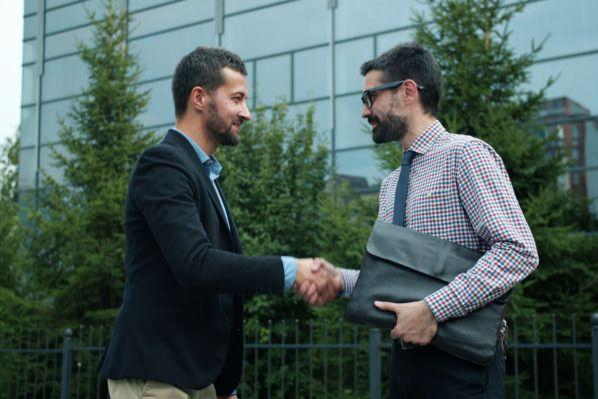
There was a time, to your point, that I would never have ignored an email no matter what because it was our upbringing. It was rude. I owed that person an answer. Now, you're so inundated. I'm so inundated. We're all so inundated. People get my phone number. I get spammed. You don't know if it's real or if it's not real. It’s a lot. To survive, you have to pick and choose where you invest your energy and what you respond to.
Kayak, Travelocity, any number of these companies could have put travel agents, the people, out of business and didn't. We're hearing and seeing this because we spend so much time in front of organizations that are made of various cohorts. The demographic has shifted. Most workers who are Millennial-aged and Gen Z by 2030 and beyond 2030 will make up more than the majority of the workforce.
What we're hearing is that there are a lot of people very anxious about AI in terms of their job security. Especially even coming out of college, people are getting booed who are delivering speeches. I don't know if you ever place the commencement speaker. Do you ever do that? Does your firm ever place a commencement speaker?
No, because typically, there's no honorarium associated with a commencement speaker. They get an honorary doctor's degree.
That's right.
A percentage of an honorary doctor's degree doesn't pay the bills. It’s not a tassel I get to wear around and say, “Woohoo.”
They're getting booed, some of these folks, by the students when they mention AI and talk about AI. This has become a thing. I want to share a quick AI anecdote. It’s a little story that's timely from our part of the business. Then, I want to get your thoughts on this. We didn't bury the lead. What you're saying is that AI, while being part of this velocity of change that people are dealing with, is net positive. We're likely to come out on the other side, going, “That was great. That was the best thing that could happen.”
I'm the same way. If you've been around at least long enough to have seen a fair number of the hills and valleys of things in business and in life, you recognize what emerges from it. It's always growth. The story is always going to be net positive because it's net growth. We asked somebody. I won't say who this is, but a video editor who has handled our demo reel. We love him. He's very talented. That's how I view it. If you look at my demo reel and don't think it's so hot, it's on him. We think the world of him.
We said to him, “We have a brand-new website that's about to launch in July. We wanted to update clips. We wanted to have not only the longer clips as well as the shorter ones, but even do them in video short, like a YouTube short thing.” It’s something cool on a carousel. We said, “The last 3 or 4 talks that we had recorded, these big events in the last couple of months, we want you to go through them. Use that amazing quality you have for finding the perfect sound bite or segment. Pull out the clips and let us see them, and then we're going to use them on a new website.
Why Delegating Core Competencies To Automation Fails
He says, “I'm going to also use an AI tool to help to speed that process up and get this done for you guys quickly.” Sure enough, he uses the AI tool. It goes through these hour-long videos of keynotes, etc., and pulls together a list of clips. There's nothing unique about them. There's nothing so different between that clip other than the stage and some other clip that's already on our website.
Tweet: Technology should amplify human skill, not replace it. When you abdicate your core competency, you settle for mediocre work.
I said to somebody on our team, “He used AI, but he abdicated his core competency.” The thing that was most valuable about him that will never be replaced by AI, in my opinion, is human plus, not human minus. He made it human minus. What he provided to us was mediocre. That's my most recent AI story relative to the world of speaking.
I had an interesting email from a long-term employee. She handles our finances, so she's tuning in. She thinks it's funny that I'm sharing this. I read it, and I thought her email had been hacked. I immediately forwarded it to Kerris and said, “Get with this person and make sure she sent this email.” The answer was yes. What happened was a long, complicated thing. She multitasked, like the best of them. It's clear she used some tool to summarize this and sent the email to me. It didn't sound like her.
Her core competency is that she knows me well. She knows how to communicate with me. She knows what to lead with. It was not that style at all. That's a similar story. I did not even think she sent it. I'm all in favor of AI, but don't forget who you are in the process. Don't forget that unique value you bring in the relationship. You know how people want to be communicated with. You can't leave yourself out of the equation.
I'm going to ask you a big question and a hard one. I want to get your gut on this because I know you don't have a crystal ball. How do you think AI is going to impact our industry?
I think it will be like the travel agent story we were talking about. Some transactions will be automated. Some decision-making will become very transactional. It'll go out and ask Claude or ChatGPT, “Who's the best speaker in this space for this amount of money?” and they'll go with it. A lot of people who tend to already be more transactional and less on relationships are going to support that more. The people that want something special, that want to rely on expertise, and that want that creative component we talked about earlier are going to use AI.
One of the things that happens when you have a long-term client is it reaches a point where it doesn't feel like I have a good new idea. It has happened to me so many times over the years. They've got the greatest hits, and they want something more unique because we've been working together longer. I'm like, “I don't know. I truly don't know.” Good relationships, we acknowledge that, like, “I don't know. You're asking for something very unique. I don't have the exact answer.”
There’s transparency, which means trust.
Often, they'll come back. This is the perfect client. They'll come back and go, “I did a little research. I went on AI. I went over here. What do you know about these people?” They're going to utilize that tool to come up with this list of people. That's the other funny thing. If you go on the old World Wide Web, you may get false information that tells you Big Name is a speaker, but in fact, they're not. You may get false information that tells you Big Name only charges $20,000 when, in fact, they're $200,000.
The good relationships, when we hit that spot where we're not coming up with the solution, will go do their research, but they'll come back and say, “What do you think about this list?” Then, we can say, “I know you'll see that person out there. They haven't accepted a speaking engagement in twenty years, and they're not going to,” or, “These 4 people are all over $400,000. I forgot about that person. They're great.” That's the answer. That's how you can use some of these tools in this world to make sure that we're not missing anything. That might be what we’ll see.
I'm not sure if I'm giving credit to the right person, but I think it was Nietzsche that said, “Common sense is not common.” We all know that phrase, right? I love that.

What AI cannot sell for is common sense. We can’t solve it. AI can’t solve it.
By the way, I cannot believe your mom is going to be 91, and she's still a travel agent. That is so cool. My mom celebrated her 90th birthday. She's got some pretty cool real estate stuff going on. It's the reason those people have stuck with your mom. It’s her experience, the places she's been, and the conversation she had about the person that went to that location and didn't like it. It’s the flowers she got a couple of months ago because that person said that was the best hotel they'd ever stayed at in their entire life. I don't know what your mom's name is, but her touch is what people are going to keep coming back for.
Irene. I sent her that copy of that book I talked about earlier, being a proud son. I wrote it in the book, and I told her what I wrote. She's taught my brother and me so much about the value of personal connection. That's not going anywhere. We have a pretty wide audience for this show. If you're worried on a scale of 1 to 10 and your worry is a 1, God bless you. That’s great. If you're a ten, God bless you, but read this. The things that humanity truly is are not going away because of a tech revolution. It is a revolution. Does that mean that there's maybe less space for mediocrity? I'm going to try to close the loop on that story earlier. Maybe. I don't know if that's a bad thing.
I don't think that's a bad thing.
If our true value is the value that Irene brings to her travel business or that you bring to the speaking business, or that speaker brings to the stage, then that's a good thing. That's a thing we celebrate, not a thing that we're being resistant to. Resistance in the end is going to be painful, so why go through it? We’ll wrap up things. I so love that we had time together.
I know. It has been great.
We've talked a little bit about the future of work in this world. There are speakers going to be reading this and people in all facets of the industry, too. Is there advice that you give to your team to help them to navigate what feels like times of uncertainty?
Deploying Empathy As An Unbeatable Advantage
Empathy. Sometimes, people hang up, and they're like, “That person's difficult,” or, “They're so challenging. It's all coming at us so rapidly. Be empathetic. You don't know what's going on the other side. I don't know that AI can replicate empathy. We have to put ourselves in other people's shoes. We have to all go through this together. I try to demonstrate it with employees that are having a bad day. I try to demonstrate it with speakers that are having a bad day. As all these things get streamlined, the relationships are that much more important.
If I had one piece of advice to speakers and agents across the board, it's to be empathetic and be easy to work with. Be reasonable. Things are moving fast. In being difficult or unreasonable, there's not a lot of time for that. That is going to be a differentiator as we move forward in this fast-paced world. Being on the same page and striving for the same type of goals is what makes long-term partnerships work.
Tweet: Disruption hurts when you resist it. When you reframe setbacks as catalysts for growth, your business becomes change proof.
One of the first questions I ask at the beginning of a keynote is how people define resilience personally and professionally. I feel like you've provided a great definition. A great way to look at resilience is something other than grit or bouncing back. We love to debunk those myths. The idea that you deploy empathy, in this case, is not a unique selling proposition. It is a superpower. It's part of our super intelligence to be able to do that which cannot be replicated in artificial intelligence.
Reframing Disruption Into Strategic Growth
I also think reframing is so key. One of the questions my former business coach used to ask me all the time is, “Is there another way you could look at that? How can you reframe something?” She was so powerful in my most resilient professional story, which was the pandemic. I remember her saying to me, “This pandemic could be the greatest gift to your business if you choose to look at it that way.” She planted that seed. Once I got over the initial shock that all of our events had been canceled and our team went from 12 people to 4, I started looking at, “What's the gift here? How is this good for my company?”
I do think I'm a far better leader than I ever was pre-pandemic. The culture at GDA is next level compared to pre-pandemic. Taking clients for granted and taking speakers for granted is no more. Every time a date occurs, you're like, “That was so good.” It is reframing and how you can look for what can be good. In essence, you were saying that about AI. It’s scary, and it’s coming fast, but what can be good and what can be unique on the other side of this?
I love that. My wife would call that finding the creative opportunity. It's that reframe. Coaches are great for that thing. I have a business coach. I still think of words she shared with me so many years ago when you’re in conflict with expectations. You’re like, “It was supposed to go this way. I was supposed to get the yes. I was supposed to work out,” or whatever it might be. She would say, “When you know what doesn't work, you know what does work. When you know what you don't want, you know what you do want.” It's amazing.
We're looking for clarity. I go back to that tool. We often will ask people to do a T-Chart. On one side, it's the things that don't work, or the things that you don't like, or whatever. On the other side, where do you have complete clarity about what you do want, or what you do like, or what does work? It's a fascinating way to see it. The word for it, you said it. It's a reframe. It's a massive reframe. That's so cool. I love talking to you.
I know. I felt that the very first time you came into our office. You were like, “Be on the show.” I'm like, “That'll be a pleasure.”
Most speaker bureaus will not create a space to come in, meet the team, and have a moment to do what my mom still talks about, which is connecting face-to-face, shaking hands, having a hug, and taking a picture. You guys do that.
We do have a little filter on that. You've done good work for us, so we do appreciate that.
Thank you so much. It is a pleasure. I so appreciate all the insights that you shared with us.
Thank you.
‐‐‐
I hope you loved that conversation. I thoroughly enjoyed speaking to Gail. I always do. As I said at the outset in her introduction, she's a lovely person. Her mind is very fertile. She's got so much experience in business that listening to her and her insights, even when they're off the cuff because she doesn't know what the question is, is something special. Her mind works well. To the point of some of our conversation, AI cannot replicate that. It can't replace it. That's a good example.
We spoke about so many cool things about how it is that great leaders behave. She shared with us that empathy is the one thing that cannot be replicated by AI that leaders, especially in times of great change, need to cultivate. Sometimes, that word gets used like a lot of words get used and become jargon. Through her story and the way she created context for how she deploys and grows empathy in her business, we can understand it and see where it's more applicable for ourselves as well.
We do have to sit for a moment, even when we're feeling like we're being ghosted or when something is interfering with our process. Maybe we get an outright no to a request, or our expectations are not met. Gail spoke about how her coach addresses frustration as an opportunity or as a chance to see where there are some new insights that are possible or some new opportunities, creatively speaking.
Being able to understand for a moment without judgment how someone else might be dealing with stuff and pausing to ask questions that lead to greater empathy is an actual strategy, and one that is not the norm. It's atypical, and therefore, it becomes a tool. It becomes an advantage. It becomes something that differentiates you as a leader, a person who's contributing to the team, an entrepreneur, an operator, an owner, etc. Something that we have to pay attention to is where we are human plus and not human minus as it relates to the technology that is changing the way work is performed and the way that we're going to interact with work in the present and future. I love that conversation.
I love that we got to chat about my mom and her occupation, her business, and the fact that she's still doing it at almost 91, which is so dope. I am shouting out and propping up my mama for the fact that she's still after it after all these years. Her secret sauce is not writing more clever emails or deploying OpenClaw or a lobster to get her work done. It's all about connection in the real sense with other people.
For my mom, that means face-to-face, a handshake and all that good stuff, which we know is challenging in the world we live in. If you can deploy and use that, it can be a master of human-to-human connection now more than ever, perhaps. It is a great advantage to living a good life, having more joy and more peace in your life, and certainly being more successful in everything that you put your attention to.
[With that, I want to say thank you so much for being a part of this Change Proof community. Thank you for supporting the brand-new book and its launch, Re-Culture. You can go to Amazon and type in the Re-Culture book, and there it is. We'd love to hear from you. If you love that book, please leave a review on Amazon. That's so helpful. We'd love it if you do that. Also, let us know your thoughts. You can reach out to us at AdamMarkel.com/podcast. Leave a comment, question, or any thoughts for Gail, for myself, or thoughts about the new book, Re-Culture. We appreciate you, as always, for being a part of the community. I will say for now, ciao.
Important Links
About Gail Davis
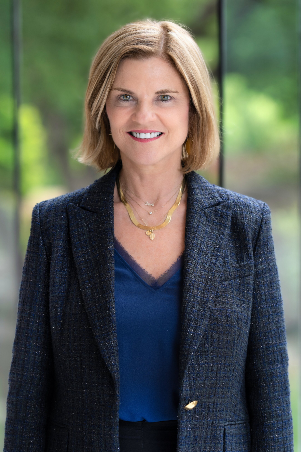
Gail Davis is the Founder & President of GDA Speakers, with a career defined by leading high-impact corporate events and building a premier speaker bureau from the ground up. After 25 years at EDS as a corporate event planner, her discovery of Nando Parrado - the hero of the 1972 Andes plane crash - helped shape GDA’s foundation and long-standing success. As past President of the International Association of Speakers Bureaus and an active member of EO Dallas, Gail has earned numerous top industry honors and is widely recognized for her leadership and influence.
Build Momentum That Lasts
By combining practical frameworks with decades of experience, he transforms insight into systems that fuel growth, engagement, and long-term resilience.
Fresh Perspectives on Leadership & Performance