
.png)



Resilience In The Podium And Beyond With Rich Tiller

 In a field as dynamic and competitive as speaking, resilience is not just an advantage but a necessity. In this episode, Adam Markel sits down with Rich Tiller, an industry leader and two-time past president of the International Association of Speakers Bureaus (1990-91 & 1991-92.). They dive deep into Rich’s journey, from his early days as an athletic trainer to becoming a catalyst for connecting speakers with audiences. Rich highlights the evolution of the Speakers Bureau, particularly within the agricultural sector where he initially started, eventually branching out to create a non-agricultural division. Rich’s story is a testament to the resilience required in the speaking industry and the transformative power of effective communication.
Show Notes: Raw audio
In a field as dynamic and competitive as speaking, resilience is not just an advantage but a necessity. In this episode, Adam Markel sits down with Rich Tiller, an industry leader and two-time past president of the International Association of Speakers Bureaus (1990-91 & 1991-92.). They dive deep into Rich’s journey, from his early days as an athletic trainer to becoming a catalyst for connecting speakers with audiences. Rich highlights the evolution of the Speakers Bureau, particularly within the agricultural sector where he initially started, eventually branching out to create a non-agricultural division. Rich’s story is a testament to the resilience required in the speaking industry and the transformative power of effective communication.
Show Notes: Raw audio
01:29 – Getting Into The Events Industry
04:48 – Resilience And The Speaking Industry
31:46 – Debunking Myths About Speakers Bureaus
37:19 – Advice For Speakers And Event Organizers
--
Watch the episode here
Listen to the podcast here
Resilience In The Podium And Beyond With Rich Tiller
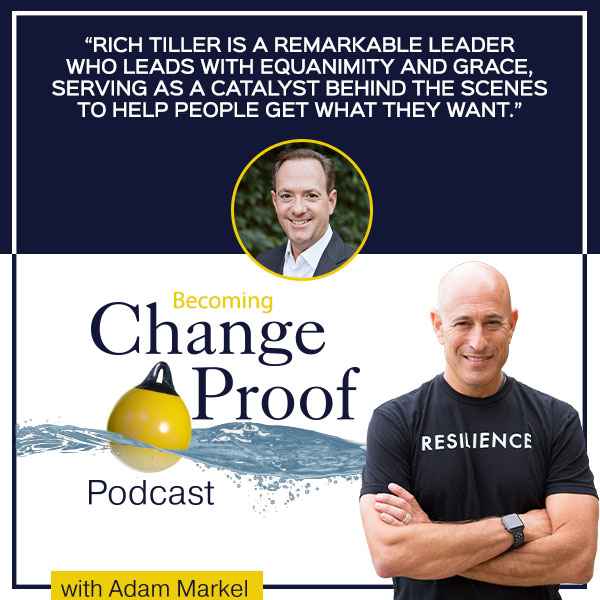
Welcome back to another episode of the show. I’m looking forward to the conversation that I'm about to have with Rich Tiller. I have known Rich for a couple of years now. He is an industry leader and amazing thought leader and a heck of a nice person as well. You're going to learn a lot from him. Let me share a little bit more about his background and then we're going to jump right in.Rich Tiller is a Purdue University grad. He is a two-time past president of the International Association of Speaker Bureaus. He's been in the speaker bureau industry since 1985 and currently runs two speaker bureau divisions himself. He has also booked over 9,300 events. That's a remarkable number. We're going to dig into some of that and a whole lot more. Sit back and enjoy my conversation with the one and the only Rich Tiller.
---
Rich, you get to hear your bio and your CV from time to time, I'm sure. I'm going to ask you a question that's not a part of that. Actually, funny enough, I want to know one thing that's not included in the standard introduction of Rich Tiller that you would love for people to know about you.It goes hand in hand. One of the first things is that when I was a teenager, probably starting at 12 or 13 years old, I used to read self-help books, Norman Vincent Peale and all those kinds of things. I was drawn to that. That ties into being in this business. I've always been behind the scenes. I was an athletic trainer in high school, working with basketball, track, and football teams, taping ankles. Now, it's the certified athletic trainers doing that, but I love taping ankles and helping out and being with the team. I've always been behind the scenes, and that's what a bureau is like in the meetings industry. It's continued being behind the scenes as a catalyst for people, trying to help people get what they want.
Getting Into The Events Industry
You're touching on the origin story a little bit. I think it's a good place to actually start, having written a book calledPivot. There are obviously a lot of pivots in your personal and business life. To begin with, how'd you get into the events industry? I'm guessing that in high school, you weren't thinking, “I'm going to get into the event space.” You're a Purdue grad, is that right?
Yes. It's funny. I've always been called a salesman since I was little. I had five different newspaper routes and was always cutting grass and selling things. I wanted a sales degree and wanted to sell higher-ticket items, which was in my head when I was a teenager. The only sales marketing degree at Purdue University at the time, when I started school in 1981, was in the Department of Agricultural Economics. I thought, “That's odd.” I met a couple of the advisors there. They quickly sold me. They were the most genuine down to earth people. I joined that, but when I was in college, and also in the summertime, I didn't want to get any old job. I took a job and met a guy who was in the cookware china and crystal industry. I sold those items, not door to door, but through telephone-qualified leads and did that for four summers. I learned as much doing that as four years in school. It was a great experience. My counselor at Purdue was part of a training company. Senior year, he said, “You should talk to these guys because they want to start a speaker's bureau. Their niche was training in agriculture. I talked to them and started working for them halfway through my senior year. That got me in the business in 1985, and I have been in the business ever since. Mainly, it's been agribusiness, but we have a lot of clients that leave the agribusiness area to go into a different industry call. We have two divisions, one's an ag and then one's a non-ag called professional speakers network. That's the lowdown. You said that it's a lot of supporting behind the scenes. Maybe for people that don't exactly know what the innards of that industry are, what is that? Give us, if you can, more than just a survey of what it's like to be behind the scenes.
A lot of meeting planners are professional meeting planners, and then there are people who are thrown into that role. Someone tells them, “You need to get a speaker for this event,” or, “You need to come up with ideas for an event.” In different ways, referrals, they find our website, whatever reason we get in contact with them. We find out what they're looking for, their budget range, and who they've had in the past. We put together an electronic proposal with ideas for them to consider. Rarely are they the sole decision maker, and they may share it with their committee or whoever they share it with. We help them save time in finding a proven speaker who can accomplish what they want to accomplish within their budget range. That's the gist of what a speaker's bureau does. Our goal is, of course, to work with that planner long-term versus one-time.
Resilience And The Speaking Industry
From a resiliency standpoint, which is a topic I know we're going to cover, we're going to talk about how resilient you figure a speaker, somebody that's a budding speaker, somebody that's considering this? We find that in our work, not in my own keynote speaking, but in our work through this organization called WorkWell, where we're in conversations with leaders at organizations about what their biggest challenges are.Often, we find that people are in the midst of not only solving those challenges but thinking about their next step. More than a handful of times, I hear from a senior-level executive who's planning for retirement and planning for what they're going to do in the pivot that comes after. A lot of people will say to me, “I want to do what you do.” I'm like, “Please, everybody. Maybe you do. Maybe you don't. You may need to know a little bit more about it, whatever.”
It's interesting and it's funny. I finished this book,
Shoe Dog, which is the business memoir of Phil Knight, the founder of Nike. Not to give it away, but Nike wasn't called Nike for, I don't know, the first 14 or 15 years of the organization's existence. I highly recommend that people get that book. It's a great read.
At the end of the book, Rich, I don't know if you've read it or heard this, but Phil said of everything that he loves to do and wants to do and would want to do more of, it's keynotes, it's speaking to audiences, that is the thing that gives him the greatest fulfillment which is phenomenal. It is a great thing to aspire to do, and those executives who are thinking about pivoting into that potentially later on are great. It's not as easy, perhaps, as it looks. Could you share a little bit about whether it's a harrowing experience or framed in terms of resiliency?
It's very common, as you've indicated, that individuals want to do that as they get close to retirement or if they want to make a career change, whatever the case might be. I think the important thing is they have to focus on what's going to be beneficial to whoever that audience is. The error I think a lot of people make is the individual or speaker makes it too much about them. The audience, unfortunately, doesn't care about them. They care about ideas that are going to help themselves personally. It can be reframed to focus on what's going to help that audience member. The first step is to make sure you have the right perspective. What information is going to be valuable to them, and how can they make sure that it's saleable because this person might want to talk on a topic that has no demand whatsoever? Getting a speech coach, talking to different bureaus, looking and seeing who the most popular speakers are, what are their topics. How to be unique? If they get into leadership in general, there's a ton of competition. Look and then evaluate and look at the people, look at the speaker speaking in that area and what their credentials are, and find out. Do your due diligence to find out who's doing it well and what their fees are. Finally, having the right speech coach because the delivery is the most important thing. Having the right speech coach is going to be very important. People will be engaged and entertained through the delivery. It's a specialized form of show business. That's what the speaking business is, I think. Unless you're delivering it in an entertaining manner, it isn't going to sell. Those are the first things that come to my mind. You're evaluating a speaker, let's say. It's somebody that you might think you could sell, represent, etc. There's a lot of them and it's a blend of things. I get that, but I'm also curious, personally, if there's one thing that if every bell that rings in your head that goes like the way you might be evaluating if you were a coach and you were looking at an athlete and you say, “This is the one quality that's most important in an athlete or in this case in a speaker.” What's that quality for you?
I think it's the likeability factor. It's that It factor that I don't think you can put it on. I think you either have it or you don't. I think the likeability factor, and we've got to make the assumption that they've got great content and great material. Suppose they have that or can develop that. The likeability factor is everything because that leads right into the entertainment factor and how engaged the audience is going to be with the speaker. Charisma, is that a word that rings similar to that, the word we're talking about? From my standpoint, engagement is everything. Content is vital, but the context is even more important, the container that gets set. That context or that container is created through engagement, in my opinion. When the audience is leaning in, you can always tell from the back of the room because I like to attend other sessions when I'm brought in, and I'm not the only keynote speaker. I love to sit in on my colleagues and see how they're doing. What does the room feel like?
When people are on their phones in the back, especially in a big room, or they're getting up a lot or they're fidgeting a lot, or obviously, if they're talking to one another and they're not in part of a process or something, it says a lot about what's lacking in terms of engagement in the room. The content is important. It's got to be unique, as you said, and everything else. I think what you've said is I feel the same way about engagement or charisma or that likeability, maybe it's called the It factor in some other contexts. I think that's super important.
Sorry to interrupt, but I have to note that when we worked together in January, it was so nice to see your room was not only full but a lot of people in the back of the room and out the back door. I couldn't even get in. I was in the back of the room. To your point, people were so engaged with you, and anybody reading this who knows you probably saw you in action and knew that you were like that. You've got that and you've got the energy and it makes me think of one other speaker that we've worked with many times over the years. I don't know if you've seen him personally, but if you've ever seen Charlie Plum, a prisoner of war in Hanoi Hilton with John McCain and others for 5.5 years, he makes his points. I think it's so brilliant because after he makes his point and the colorful stories that go along with it, he flips the mirror. He puts it back on the audience. “How are you doing with this communication with your team?” He talks about being isolated, unable to communicate with his team, and how they used a wire through the holes in the wall to make noises. I think the ability to flip that mirror, so to speak, back on the audience members so they can internalize what you're saying is the other part of that charisma and connecting with the audience. Anyway, just a side note.
We're thinking about all the different moving parts of what this is. It's hard to pin down 1 or 2, but if you pin me down and say, “What's the one thing that a speaker could do differently?” I have seen a lot of speakers that, to me, a bit flat at times and lack engagement, etc. That one thing would be what you said, which is to ask a question.
People that are reading this now that maybe have a talk they're giving sometime soon, whether it's a meeting that's in the office, it's a presentation or it's something different than that, or maybe some folks are even thinking about a TED or whatever it might be. Even in a TED context, I think the most powerful talks are the ones where, as you said, you flip the script. You make it about them so that even if, somehow or another, it wasn't already clear that your purpose in being there is not about you, when you ask a question, it becomes about the audience.
I think that the simplest thing you can do is ask a question. This is an interesting aside from this, I suppose, actually allows for an answer because how often have you seen a speaker that will ask a question almost rhetorically and not wait for the answer and move on from there as though that question wasn't asked at all?
To give the audience that 20 seconds, 30 seconds, even that length of time to chat with each other or think about. It's a very powerful thing. We've all come through the pandemic at this point, and we're on to some degree on the other side, yet there's a lot of hangover from it. A lot of the work that I do in the world has to do with the ripple effect and even the damage that's been done due to the lingering effects in the form of exhaustion, burnout, anxiety, and a number of those kinds of things. Taking us back to that moment at the beginning when it all came down and things shut down. You've been in business now. I'm not going to do it, but if you want to say, how long is the speaking business? It's true because you're operating two bureaus. Isn't that right, Rich?
We are. A vast majority of our businesses are on the ag side, the ag industry, which is the largest industry in the country. Yeah, I've been doing this for over 38 years. In terms of the disruption and the need to create or to be resilient in the face of unexpected change, how does the pandemic rank in terms of other disruptions that your businesses might have faced? How did you approach that? I'm asking you, if you can be a little open kimono here about, what it was like in those first couple of weeks, if you can even recall anymore. It's a time warp.
It is a time warp. It's hard to forget. I don't think I'll ever forget. In the middle of March 2020, all of a sudden, the phone started ringing, but everybody thought, “A couple of months, we'll be back.” We had 175 postponements. We didn't know what we were going to do. Thank goodness we had accumulated retained earnings and had a very substantial rainy day fund. We had an assistant named Kelly that we had worked with for years. She started working from home. We did a lot of postponements and we'll get back to this when we can. We did a bunch of virtuals. Virtuals were very low fees, sometimes 10% of a speaker fee before they came up and still doing a few virtuals now. We did some virtuals and had to tap into the rainy day fund a little bit, but still worked out fine. I think watching overhead was very important. We weathered that very well. We've been very blessed to get through that, but I think it puts things into perspective. I believe it is very dangerous if you take the victim mentality. Never wanted to play the victim card and figure out, “What can we do? What can we learn from this?” We made our way through it over time. I'm grateful that it's behind us, of course, but we learned and gained wisdom through the process.

I've seen you face to face and I know how fit you are and more than that, your energy is a fit energy, which to me is attitude. It's perspective. It's being able to see above the clouds kind of thing. I want to ask you a related question. I'm going to wrap things up here, but when it comes to the contingencies of life, that unexpected twists and turns, I think it's the case that sometimes people will have an event put on an event and they put it together and they find their speakers and all that thing.
Debunking Myths About Speakers Bureaus
They find out that there are a lot of things that can go sideways, everything from getting on a plane and then the plane doesn't make it to its destination on time. I'd love to get a sense of why work with the Speaker’s Bureau. Are there any myths here that we could take a minute to debunk? I say that only because as a public speaker and having worked with you and with other bureaus, you're more than a valuable partner in our work. I value the relationship, but I also know it's incredibly valuable to the folks on the other side who are putting these events on. Maybe speak to a little bit of that.We'll say the benefit to the speaker first because the more agents or speakers bureaus that you work with or any of your viewers, if they're going to become a speaker, it's like having a free sales rep there's no overhead involved other than when they actually find you business. Now, there are a few agencies that may charge retainers, but find out all about that upfront. We don't charge retainers to any of the people we work with. We only get paid when we book the speaker. That's a benefit to the speaker. To the meeting planner, I look at it this way. We help them save a lot of time because when we find out what they're looking for in their budget range and who they've had in the past, we can come back with a refined list of, “Here are 3 or 5 people you need to check out,” whatever they want. We save them time with options, and then we're an insurance policy. I can’t tell you, we've done 9,300 events since 1985, and I've had a situation where one speaker passed away suddenly, on 18 dates that we had on the books. We had one speaker who got sick on the plane and was kicked off. He calls me, reclined in his seat in his car in the parking lot, “Rich, I can’t do the date tomorrow.” He was going to go on a date in Iowa. I said, “Okay.” I never call a client with bad news unless I have an option. We have speakers all over the country. I called the guy who lived in Northern Iowa and found out if he was available to speak the next morning and I had other options as well. He said, “Yes.” I called the meeting planner. “This speaker that you booked cannot make it. They're sick, violently ill, kicked off the plane, but here's an option. Let me send you the information. If you want him, let me know, and we can get him for you. He'll be there the next day.” He was even more expensive. It wasn't any extra cost to the client. They said, “Great, he'll do a great job.” The meeting planner called the next day and said, “The guy got a standing ovation. I don't know how the other speaker could have done a better job.” We had a situation where a speaker got COVID, called me 24 hours in advance, and said, “I can’t travel. They won't let me travel.” We found another speaker on a complimentary topic in Miami, who is available four hours later to get on a plane flight to Phoenix, did the date. Huge success. Because of the different people that we know, we can help satisfy the need for filling that slot with a great speaker. That's the number one thing. We've got their back. Is it common that that happens? No, it's not common. However, if it does, it's important to you if you're the planner. I think that's what we bring is saving them time and we've got their back. What does it say on my t-shirt, Rich?
Got your back. Perfect. It's one of those things that I think you cannot underestimate or I guess you can underestimate, you can’t overestimate the value of having that backup plan and knowing that you have a network that is, honestly, in a pinch. In a pinch happens more than you would care to believe. I’ve got to tell you, we've changed our way of doing business as a result of doing business with you all because we never used to book. I would always go in at least a day ahead of time to any of our engagements, etc. Now we actually book two plane tickets.
For colleagues of mine or meeting planners and the like who may be reading this right now, it's a great requirement to add that because it's no additional cost. It's a little additional logistics and whatnot. We'll book the two flights, and one of them, obviously, or both of them, will be refundable, and we'll pick the one that's going to go out.
Sometimes you get enough notice ahead of time that it's not even a nail-biting thing at the end, at the last minute. We know there's going to be a delay on this flight and perhaps it might not go out. We'll literally cancel that one and go with the backup. That's only the result of you guys having introduced us to that system, Rich.
I'm glad you're doing that because if you're going through Dallas and they're going to have an ice storm and Denver looks good, when would that happen but it happens . You cannot book two flights on the same airline. Airlines won't let you do it. It's got to be a separate airline. All these kinds of things and tricks, yeah, have the backups whenever we always have at least one backup because you never know what's going to happen. You’ve got to be there.
Advice For Speakers And Event Organizers
Roll up sleeves. This is the last question here. It's button two parts, though, Rich. I want to tap you for advice that you would give to, again, maybe even a seasoned speaker who's been trying to break through with bureaus and maybe hasn't had as much luck or somebody who’s getting into it. What's one piece of advice for a speaker in approaching or developing a relationship with a speaker bureau?Also, what's one piece of advice for somebody that puts on meetings or is involved, like you say, on a committee or has got an event that's coming up and maybe there's a piece of advice for them in terms of choosing a bureau or working with a bureau? Maybe they haven't done that in the past or maybe they didn't have a great experience. Who knows? Let's start with the speaker if you can.
I would say that if there's a speaker that wants to work with a bureau, if some of the speakers that bureau's already working with are friends of yours, ask for that introduction. You can always send an email to the bureau. I don't know if you're going to get a response from some bureaus. I don't know how they process that. When I get a cold email, I quickly look at what their topics are, and I look at their video links or video clips. If it looks like something that we have a need for or think we can do some business with them, then I'll respond, but that would be my comment there. The other thing is as long as any speaker has some type of coach they're working with, whether it's delivery or someone helping them write the material or refine the material, always, school's never out for the pro, right? You've got to always try to keep refining and getting better. For the meeting planners, usually, they're already talking to other meeting planners to find out who they work with but find the trusted source. There are a few bad apples in any industry. If you've had a bad experience with a bureau, talk to your peers and find out who they've worked with that they can trust. I think that the bottom line is who they feel comfortable with and it gives them good people they can trust because somebody can oversell their ability in any marketing.

Closing
For our community, you know the drill. If you want to consume more, find out more about what Rich does and his bureaus, and connect even there with Rich and his team, we have all the links. If somebody that would benefit from reading this conversation, would be willing to share it, that helps the algorithm. I don't know exactly how that algorithm works. I just know that when you like it, when you share it, other people receive it as well and that's a benefit to us. I so thank you for doing that. There'll be a little bit of a recap in a moment here from me, where I'll give you some additional assets and resources for yourselves as well. For now, anyway, I want to say ciao. Thank you so much and Rich, once again, what a pleasure, my friend. Thanks, Adam. It’s good to see you. Thanks.---
As promised, I think that conversation was wonderful. I know I so enjoyed it. I hope you enjoyed it. We'd always love to get your feedback and welcome it. If there are comment questions for myself or Rich, please feel free to go to AdamMarkel.com/podcast and leave that question or comment there. I love the fact that I got to speak with and share this conversation with all of you, somebody who's been in the industry as long as he has been. He's such a young guy, by the way. He's been doing this since 1985. He runs two divisions of a very influential speaker bureau and has booked, as I said in the intro, 9,300 events. I think he updated us on that as well. There's no stopping the train. It is full-on. I'm moving down the track, but Rich is a remarkable leader. I think he leads with a certain ease and grace. I know that a lot of leaders, sometimes, especially younger leaders think that they have to be hard. They have to be cold. They can’t show emotion or they can’t be soft in any way. I think I get valuable experience from being around Rich, having worked alongside him, having been booked by his speaker bureau many times, is the way he leads with this calm and this equanimity, this grace actually, it's very calming to the people around him. I know I am confident in his presence because his energy isn't triggering me to feel anxious or uncertain or any of those things. This work is tough enough that business is a challenge on any good day, but to be working with people that have that quiet confidence, that equanimity, it's almost like that Superman mild manneredness, which is again, a pleasure to be around. It's something of a great example for all of us in how we lead others and even how we lead ourselves. I so enjoyed my conversation with Rich. I hope you did as well. I learned a lot about the state of the union when it comes to what's going on in the speaking industry nowadays. That industry is a reflection of so many other industries, so many other corporate industries, as well as even what's going on in our world around. Thank you so much for being a part of the community. Thank you for sharing this episode with anybody you think would benefit from it or learn something from it. We appreciate that as well as the fact that, as always, we thank you for providing a five-star rating if that makes sense for you or if whatever rating makes sense. That feedback is like oxygen for us. It's super valuable and we appreciate you taking the time to provide it. For now, anyway, I'll say ciao for now and thank you again.Important Links:
Agricultural Speakers Network - LinkedIn
Rich Tiller – X
Instagram – Rich Tiller
About Rich Tiller

A Purdue University grad, Rich Tiller is a two-time past president of the Intl. Assoc of Speakers Bureaus (1990-91 & 1991-92.) He has been in the bureau industry since 1985, and currently runs two speaker bureau divisions. He has booked over 9300 events.
Build Momentum That Lasts
Resilient organizations don’t just adapt, they advance. Adam helps leadership teams align culture, communication, and strategy to drive forward movement through change.
By combining practical frameworks with decades of experience, he transforms insight into systems that fuel growth, engagement, and long-term resilience.
Get in TouchBy combining practical frameworks with decades of experience, he transforms insight into systems that fuel growth, engagement, and long-term resilience.
Fresh Perspectives on Leadership & Performance





























.png)
.png)
.png)